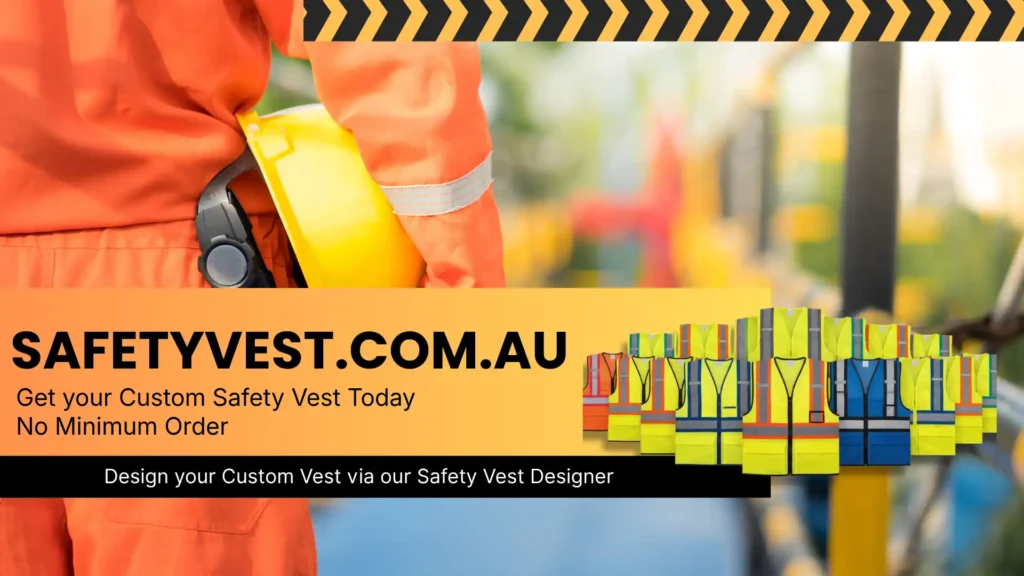
When the night shift crew on a regional construction site flicks on the floodlights, the orange‑fluorescent vests already on their backs seem bright enough—until a passing truck’s headlights wash them out. That split‑second loss of contrast can be the difference between a smooth hand‑over and a costly near‑miss.
If you’ve ever wondered whether adding LED modules to a hi‑vis vest makes a real safety difference, you’re in the right spot. In the next few minutes we’ll unpack exactly what LED safety vests are, how they perform under Australian conditions, the standards that govern them, and the pitfalls you’ll want to avoid before committing to a bulk order. By the end you’ll be able to decide if the extra wattage is a sensible investment for your workers, your budget, and your compliance obligations.
Contents
- What LED Safety Vests Are and Why They Matter
- How to Choose the Right LED Vest: A Step‑by‑Step Guide
- Compliance and Australian Standards
- Common Mistakes on Australian Worksites
- Industry‑Specific Context
- Frequently Asked Questions
- Bottom Line: Should You Switch to LED Safety Vests?
What LED Safety Vests Are and Why They Matter
Direct answer: LED safety vests combine the colour and retroreflective requirements of AS/NZS 4602.1:2011 with battery‑powered light‑emitting diodes, giving workers a continuous visual cue in low‑light or totally dark environments, which can cut incident rates where traditional high‑visibility garments fall short.
LED safety vests are essentially the same base garment you’d find in our Classic Zip‑Front Hi‑Vis Vest or Mesh Hi‑Vis Vest range, but with an integrated light source—usually a thin strip of LEDs tucked into a pocket or sewn into the rear panel. The LEDs are powered by a rechargeable battery that typically lasts 8–12 hours on a single charge, enough for a full shift plus a short overtime window.
Why does this matter in Australia? Our workplaces span everything from hot‑dry outback sites to rain‑soaked urban streets. While fluorescent colours and 50 mm retroreflective tape are proven to be visible in daylight, they lose effectiveness once the sun dips below the horizon. The addition of an active light source bridges that gap, creating a “double‑layer” of visibility: passive hi‑vis colours during the day and active illumination after dark.
From a practical standpoint, LED vests also help supervisors spot stray workers before they wander into traffic or heavy equipment zones. The constant glow can be especially valuable in mining camps, road‑work corridors, and large warehouses where line‑of‑sight is frequently broken by plant, stacks, or terrain.
How to Choose the Right LED Vest: A Step‑by‑Step Guide
When it comes to buying LED safety vests, the details matter more than the flash. Follow this checklist to avoid costly re‑orders.
| Step | What to Check | Why It Counts |
|---|---|---|
| 1 | Class rating – D/N vs. R | Class R is mandatory where workers are within 30 m of live traffic (see AS 1742.3). |
| 2 | LED placement – front, rear, or both | Rear‑mounted LEDs improve visibility to drivers approaching from behind; front LEDs help co‑workers spot each other in confined spaces. |
| 3 | Battery type & runtime – rechargeable Li‑ion, 8‑12 h typical | A vest that dies halfway through a night shift defeats the purpose. |
| 4 | Durability – water‑resistant rating (IP‑X4 or higher) | Aussie weather can be unforgiving; you need a vest that keeps shining in rain. |
| 5 | Customisation – screen print, DTF, embroidery, logo size | A clear logo on the back helps brand identification and meets WHS audit requirements. |
| 6 | Size range – XS to 7XL | Proper fit ensures the retroreflective tape stays positioned correctly around the torso. |
| 7 | Compliance documentation – CE mark, test certificates | Without paperwork you risk fines from SafeWork NSW or WorkSafe Victoria. |
| 8 | Supplier support – live designer, no setup fees, express shipping | Faster turnaround means you’re not left waiting for a safety upgrade. |
Step‑by‑step ordering process
- Identify the hazard zone – Is the work near traffic, underground, or high‑rise? Choose Class R for roadwork, Class D/N for general site work.
- Select a base vest – Our Classic Zip‑Front Hi‑Vis Vest works well for most applications; the Mesh version is better for summer heat.
- Pick LED specs – Decide on front‑only, rear‑only, or dual‑LED strips; confirm battery life matches shift length.
- Upload artwork – We accept AI, EPS, PDF, PNG, SVG files; the live designer shows you exactly where the logo will sit.
- Choose quantity – No minimum order; volume discounts start at 25 vests and increase at 50, 100, and 500+ units.
- Request a quote – Use our contact page for a no‑obligation price.
Following this flow keeps the process smooth, and because we ship to every corner of Australia—including remote outback stations—in 5–7 business days (express available), you won’t be left in the dark while waiting for your order.
Compliance and Australian Standards
LED safety vests sit at the intersection of two regulatory families: high‑visibility garment standards and electrical product safety rules.
The core hi‑vis requirements are covered by AS/NZS 4602.1:2011, which specifies the minimum fluorescent colour (yellow‑green or orange‑red) and retroreflective tape width of 50 mm that must encircle the torso. Whether the vest also carries LEDs does not change the need to meet those baseline criteria.
For the light‑emitting component, the vest must comply with the AS/NZS 1906.4 standard for retroreflective materials and, where a powered device is attached, with the AS/NZS 61340 series governing low‑voltage electrical equipment. The battery pack must be a sealed, rechargeable unit that meets the relevant safety testing—essentially the same standards applied to handheld work lights.
Enforcement falls to the state WHS regulators: SafeWork NSW, WorkSafe Victoria, WHS Queensland, and their equivalents across the nation. If a non‑compliant vest is used in a high‑risk environment, the penalty can climb to the maximum WHS Category 2 fine—$1.5 million for a body corporate in NSW.
Our compliance guide (see the Compliance Guide) details how each of our LED‑ready vests passes the required tests, and we provide a compliance certificate with every order. That paperwork is ready for audit day, so you can focus on the site rather than the regulator.
Common Mistakes or Misconceptions on Australian Worksites
Even seasoned site managers can slip up when introducing LED safety vests. Here are the three most frequent blunders, illustrated with real‑world anecdotes.
1. Assuming any LED means compliance
A mining contractor in Western Australia ordered cheap LED‑strip vests from an overseas supplier, believing the bright light alone satisfied the law. During a WHS audit, inspectors flagged the garments because the base fabric did not meet the 50 mm retro‑reflective tape requirement. The result? A $250 000 on‑site stop‑work order while new compliant vests were sourced.
2. Ignoring battery maintenance
At a large warehouse in Queensland, the fleet manager forgot to swap out the rechargeable packs after the first two weeks of use. As the batteries degraded, the LED output dropped to half brightness—still visible in daylight but barely noticeable at dusk. A near‑miss with a forklift prompted a review, and the team now follows a fortnightly charge‑cycle log.
3. Over‑customising the LED housing
A traffic‑control agency in Victoria requested oversized LED panels to “make the vests look futuristic.” The added bulk pushed the garment’s weight beyond the ergonomic limit defined in AS 1911. Workers reported neck strain, and the agency had to revert to slimmer strips. The lesson: keep the LED module modest; the human body is the limiting factor, not the battery.
By anticipating these pitfalls—checking base‑vest compliance, managing battery life, and keeping the LED hardware streamlined—you’ll avoid costly re‑work and ensure the technology truly enhances safety.
Industry‑Specific Context
LED safety vests are not a one‑size‑fits‑all solution; the value they add varies across the sectors we serve.
Construction & Building – Night‑time slab pours and roof‑top inspections are common. A rear‑mounted LED on a Class D/N vest gives crane operators a clear sight line, reducing the risk of a dropped load.
Traffic Control & Roads – Here, the law mandates Class R garments when workers are within 30 m of moving traffic (AS 1742.3). Adding a front LED strip creates a “double‑glow” that motorists can spot from further away, especially in rainy conditions when reflective tape is dampened.
Mining & Resources – Underground shafts are pitch‑dark, and head‑lamp glare can obscure conventional hi‑vis colours. Battery‑powered LED vests, combined with FR (flame‑resistant) fabric that meets AS NZS 2980, give miners a reliable visual cue without adding a separate light source.
Warehousing & Logistics – Large aisles and high‑bay racking often hide workers from forklift operators. A mesh hi‑vis vest with a low‑profile LED strip on the back ensures constant visibility, even when the ambient lighting is switched off for energy savings.
Events & Crowd Control – Security personnel moving through night‑time festivals benefit from bright front LEDs that cut through smoke and stage lighting, while still complying with hi‑vis colour standards.
Schools & Education – For kids’ hi‑vis vests used on farms or during work‑experience placements, a modest front LED can reassure parents that their child remains visible after sundown, without the need for a full‑size Class R garment.
In each scenario the key is matching the LED vest’s class, battery life, and placement to the specific hazard profile. That is why we offer a live online designer that lets you visualise the final product before you press “order”.
Frequently Asked Questions
Q: Do LED safety vests replace the need for traditional reflective tape?
A: No. The LEDs are an add‑on to the base hi‑vis garment. The vest still must meet the 50 mm retroreflective tape requirement of AS/NZS 4602.1, because the tape provides the primary visibility in daylight and serves as a backup if the battery fails.
Q: How long does the LED battery last on a typical shift?
A: Most of our LED‑ready vests come with a rechargeable Li‑ion pack rated for 8–12 hours of continuous operation at medium brightness. For longer shifts you can swap the pack mid‑day; we supply spare batteries on request.
Q: Are there colour restrictions for the LEDs themselves?
A: The standard does not prescribe LED colour, but bright white or cool‑white (6000 K) LEDs are preferred for maximum contrast. Some clients opt for amber LEDs to avoid glare for nearby drivers—both options are acceptable as long as the base hi‑vis colours remain compliant.
Q: Can I get the LEDs printed with my company logo?
A: Yes. Our customisation methods include screen print, DTF, heat transfer, and embroidery. The LED housing can also be laser‑etched with a logo, provided the artwork meets our file requirements (AI, EPS, PDF, PNG, SVG).
Q: What if I need a vest for an explosive‑risk environment?
A: For non‑spark‑prone areas, a standard LED vest is fine. In hazardous (ATEX) zones you’ll need a certified intrinsically safe LED module, which is a specialised product not stocked in our standard range. Contact our sales team for guidance.
Bottom Line: Should You Switch to LED Safety Vests?
- Enhanced visibility after dark – LED vests give a continuous light source that outperforms retroreflective tape alone in low‑light conditions.
- Compliance remains straightforward – As long as the underlying garment meets AS/NZS 4602.1 and the LED unit follows electrical safety rules, you stay on the right side of SafeWork NSW, WorkSafe Victoria, and WHS Queensland.
- Cost‑effective with no hidden fees – With no minimum order, no artwork charges, and volume discounts from 25 vests onward, the upgrade can be scaled to any budget.
If your workforce spends any amount of time in dimly lit zones, near traffic, or in remote locations where a mobile light source is impractical, LED safety vests are a sensible investment.
Ready to see the difference for yourself? Explore our full range of hi‑vis garments and start designing your LED‑ready vest on the custom safety vests page, or get a quick quote via our contact us form. Your workers’ safety shines brighter when the right gear meets the right standard.