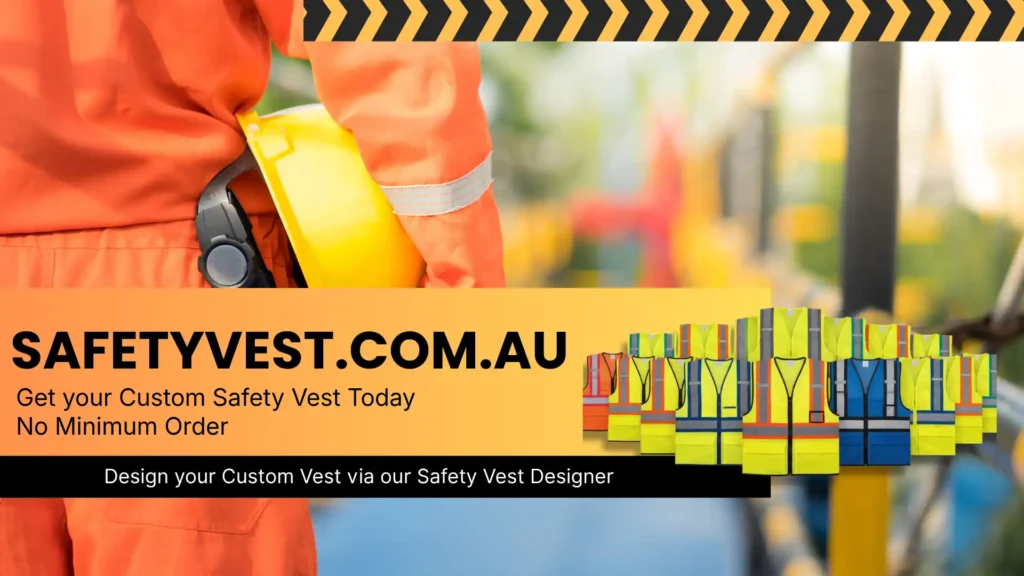
The rain‑slicked streets of Launceston can turn a routine site walk‑around into a slip‑hazard in seconds. Imagine a crew of carpenters, electricians and plant operators converging on a steep road‑work project just as a cold front sweeps across the Tamar Valley. Without high‑visibility clothing, spotting a stray hammer or a fallen scaffold brace becomes a gamble. That’s why every foreman in Northern Tasmania needs to know exactly which safety vest will keep workers seen, compliant and comfortable when the weather flips from bright sunshine to fog‑bound drizzle.
In the next few minutes you’ll discover:
- the key features that make a vest suited to Tasmania’s rugged climate and mixed‑site work,
- a step‑by‑step guide to selecting the right class, colour and fabric,
- how Australian standards such as AS/NZS 4602.1:2011 govern design and colour,
- the most common on‑site mistakes that still trip up seasoned site managers, and
- real‑world examples from construction, road‑works and mining operations across the north.
By the end, you’ll be ready to order the perfect custom safety vest for any Northern Tasmanian job – and you’ll know exactly how to keep your team legally protected and visibly safe.
Contents
- What makes safety vests essential in Northern Tasmania?
- How to choose the right vest: a practical breakdown
- Compliance with Australian standards and enforcement bodies
- Common mistakes on Australian worksites
- Industry‑specific context for construction, traffic control and mining
- Frequently Asked Questions
- Key takeaways and next steps
What makes safety vests essential in Northern Tasmania?
Short answer: Safety vests provide the visual contrast and retro‑reflective coverage required by law to keep workers visible in daylight, twilight and poor weather, reducing the risk of collisions and injuries.
Why does this matter more in the north? The region’s mix of coastal wind, dense fog in the Tamar Valley and sudden temperature swings creates environments where a worker’s silhouette can disappear in an instant. High‑visibility garments use fluorescent yellow‑green or orange‑red panels that dominate the visual spectrum, while 50 mm strips of retro‑reflective tape bounce back headlights and torch beams, alerting drivers and machine operators to a person’s exact location.
Beyond safety, a well‑chosen vest supports productivity. The breathable mesh options prevent overheating during summer heat waves on the Mersey River bridge, while flame‑resistant (FR) models meet the arc‑rating demands of the local copper‑mining sector. When a vest fits correctly—from XS to 7XL—and carries a clear, custom logo, workers feel recognised and take ownership of their own safety.
How to choose the right vest: a practical breakdown
Below is a quick‑reference table that lines up the most common vest types with the conditions you’ll face on a Northern Tasmania site.
| Vest type | Ideal use | Colour requirement | Reflective tape width | Fabric feature | Customisation |
|---|---|---|---|---|---|
| Classic Zip‑Front Hi‑Vis (Class D/N) | General construction, indoor/outdoor | Fluorescent yellow‑green or orange‑red | 50 mm, full‑torso | 100 % polyester, wind‑resistant | Screen print or embroidery |
| Mesh Hi‑Vis | Hot summer work, farms, outdoor events | Same colour rules | 50 mm, full‑torso | Open‑weave, moisture‑wicking | DTF or heat transfer |
| Surveyor Multi‑Pocket | Site supervisors, engineers | Same colour rules | 50 mm, full‑torso | Durable twill, reinforced seams | Embroidery for name tags |
| Flame‑Resistant (FR) | Mining, gas, welding | Same colour rules | 50 mm, full‑torso | AS 2980‑rated, arc‑rated fabrics | Screen print (no heat‑transfer on FR) |
| Traffic Control (Class R) | Roadwork, rail corridors | Same colour rules | 50 mm, full‑torso, high‑coverage | Heavy‑weight polyester | Logo print, reflective graphics |
| Kids Hi‑Vis | Schools, apprentices, farm kids | Same colour rules | 50 mm, full‑torso | Soft cotton‑blend | Screen print (small runs) |
Step‑by‑step selection guide
- Identify the work environment – Is it a road‑work zone near live traffic (Class R), a multi‑storey build with indoor loft areas (Class D/N), or a hot, open field (Mesh)?
- Determine the required vest class – Refer to the risk assessment: daylight only = Class D, day + night = Class D/N, high‑risk traffic = Class R.
- Pick the colour – Only fluorescent yellow‑green or orange‑red meet AS/NZS 4602.1. Choose the hue that offers the greatest contrast against the surrounding background (yellow‑green for green bushland, orange‑red for urban roadways).
- Check the retro‑reflective tape – Ensure a minimum 50 mm width that completely encircles the torso. Tape should be sewn on rather than glued for durability on rugged sites.
- Match fabric to climate – Mesh for summer, heavyweight polyester for cooler winter work, FR fabric for arc‑rated tasks.
- Size it right – Measure chest, waist and torso length; order from XS to 7XL. A well‑fitted vest stays in place when workers climb ladders or operate machinery.
- Add custom branding – Upload AI, EPS or PNG files to the live vest designer on our site and choose screen print for durability or embroidery for a premium look. No set‑up fees apply, even for a single vest.
By following these seven steps you’ll eliminate guesswork and end up with a vest that satisfies both WHS law and the practical demands of a Northern Tasmanian site.
Compliance with Australian standards and enforcement bodies
Safety vests are not a fashion statement; they are a legal requirement under the Work Health and Safety (WHS) Act. The cornerstone document is AS/NZS 4602.1:2011 – High Visibility Safety Garments, which defines the colour palette, minimum retro‑reflective tape width (50 mm) and the performance tests for fluorescent fabrics.
For road‑work crews the relevant standard shifts to AS 1742.3 (high‑risk traffic control garments). This standard mandates Class R classification, a higher ratio of reflective tape, and a minimum of 200 mm² of retro‑reflective material on the sleeves.
If you operate in mining or gas extraction, AS/NZS 2980 comes into play. It specifies the arc‑rating and flame‑resistance levels for garments that may be exposed to electrical arcs or flash fires. Our FR vests meet the highest category of this standard, giving you a compliant solution without needing a separate safety‑overgarment.
Enforcement is handled by state bodies such as SafeWork NSW, WorkSafe Victoria, and WHS Queensland. These agencies conduct regular site inspections and can issue Category 2 penalties of up to $1.5 million for a body corporate that fails to provide compliant hi‑vis apparel.
For a quick reference, you can visit our Compliance Guide, which breaks down each standard into plain‑English checklists. The guide also outlines how to document vest issuance – a simple spreadsheet noting employee name, vest size, class and delivery date satisfies most audit requirements.
Common mistakes on Australian worksites
Even seasoned site managers stumble over hi‑vis basics. Here are the three most frequent slip‑ups we see across the north, and how to avoid them.
-
Colour confusion – Some supervisors think “any bright colour” will do. The law only recognises fluorescent yellow‑green and orange‑red. A pastel lime shirt may look bright, but it fails the AS/NZS 4602.1 test and can lead to a fine. Use our online colour selector to guarantee compliance.
-
Insufficient tape coverage – A common shortcut is to place reflective strips only on the chest and back. The standard requires the tape to wrap fully around the torso, and for Class R garments additional sleeves and cuffs must be covered. When the tape isn’t continuous, a driver’s headlights can miss a worker’s side profile, especially in the twisty bends of the Bass Highway.
-
Improper sizing – Ordering “one size fits all” may save a few dollars but costs productivity. A vest that’s too loose flaps in the wind, obscuring the reflective surface; one that’s too tight restricts movement and encourages workers to remove it. Our range from XS to 7XL eliminates this risk, and the live designer lets you preview the fit before you click “order”.
A quick audit can catch these issues: walk the site at dusk, ask a colleague to spot any vest that doesn’t glow, and verify that every worker’s name tag is attached securely.
Industry‑specific context
Construction – On the Launceston waterfront redevelopment, crews toggle between indoor lofts and open‑air decking. The Classic Zip‑Front Hi‑Vis (Class D/N) offers a sleek profile for office‑area walkthroughs while still meeting retro‑reflective requirements for the harbour‑side crane operations. Add a few pockets with the Surveyor Multi‑Pocket Vest for tool‑carry and paperwork.
Traffic control & roads – The recent upgrade of the Bass Highway near Deloraine requires Class R Traffic Control Vests with high‑coverage tape. With vehicles travelling at 100 km/h, the 200 mm² reflective panels on sleeves and cuffs are vital for night‑time visibility. Custom screen‑printed logos help the public identify authorised traffic controllers, reducing confusion at detour points.
Mining & resources – The Mount Read copper mine employs Flame‑Resistant (FR) Vests that satisfy AS 2980. These vests protect against arc flashes from high‑voltage equipment while still providing the required fluorescent colour and reflective tape. Because the mine’s underground tunnels are often damp, the arc‑rated fabric’s moisture‑resistant coating extends its service life, saving the operation both time and money.
Across all three sectors, the ability to order single‑vest quantities means a small crew can receive a newly branded vest on the same day a new logo is approved—no minimum order, no set‑up fee. Delivery to regional towns such as Burnie or even remote outstations in the West Coast takes just 5–7 business days with tracked shipping, and express options are available if a sudden change in branding is required.
Frequently Asked Questions
Q: Do I need a different vest for day work versus night work?
A: Yes. Day‑only tasks can use Class D vests (fluorescent colour, no reflective tape). For any activity that may extend into dusk or low‑light conditions, a Class D/N vest with 50 mm retro‑reflective tape is required.
Q: Can I order a custom logo for just ten vests?
A: Absolutely. We accept single‑vest orders and apply screen‑print, DTF or embroidery at no extra setup charge. Upload your AI, EPS or PNG file to the live designer and receive a quote instantly.
Q: What if my site is on a remote farm in North West Tasmania?
A: We ship to all Australian postcodes, including remote locations, with tracked delivery. Standard shipping arrives in 5–7 business days; express courier can get the vests to you within 48 hours if needed.
Q: Are mesh vests really cooler, or just a marketing gimmick?
A: Mesh vests feature an open‑weave construction that allows air to circulate, reducing body temperature by up to 30 % in humid summer conditions. They still meet the colour and tape requirements of AS/NZS 4602.1, making them a practical choice for hot days on the Tamar River paddle‑wheel site.
Q: How do I prove compliance during a WHS audit?
A: Keep a simple register noting each employee’s name, vest class, size and issue date. Photographs of the vests on site, especially at dusk, help demonstrate that the 50 mm tape fully encircles the torso. Our compliance‑guide PDF can be attached to the register as supporting documentation.
Key takeaways and next steps
- Choose the correct class, colour and tape width – Class D/N for most construction, Class R for traffic control, FR for mining; stick to fluorescent yellow‑green or orange‑red, and ensure 50 mm reflective tape wraps the torso.
- Fit the vest to the Tasmanian climate – Mesh for hot, breathable comfort; heavyweight polyester or FR fabric for cooler or high‑risk environments.
- Stay audit‑ready – Record vest issuance, use our compliance guide, and conduct a dusk‑time visibility check on every site.
Ready to get your crew equipped with compliant, comfortable, and proudly branded safety vests? Use our live designer to customise a vest in minutes, or contact our specialist team for a quote tailored to your project’s size and timeline: Request a quote or explore the full range of options on our Custom Safety Vests page.
Your workers’ safety—and your peace of mind—starts with the right high‑visibility vest. Let us help you keep Northern Tasmania’s construction sites, roadways and mines visible, compliant, and ready for anything the weather throws at them.