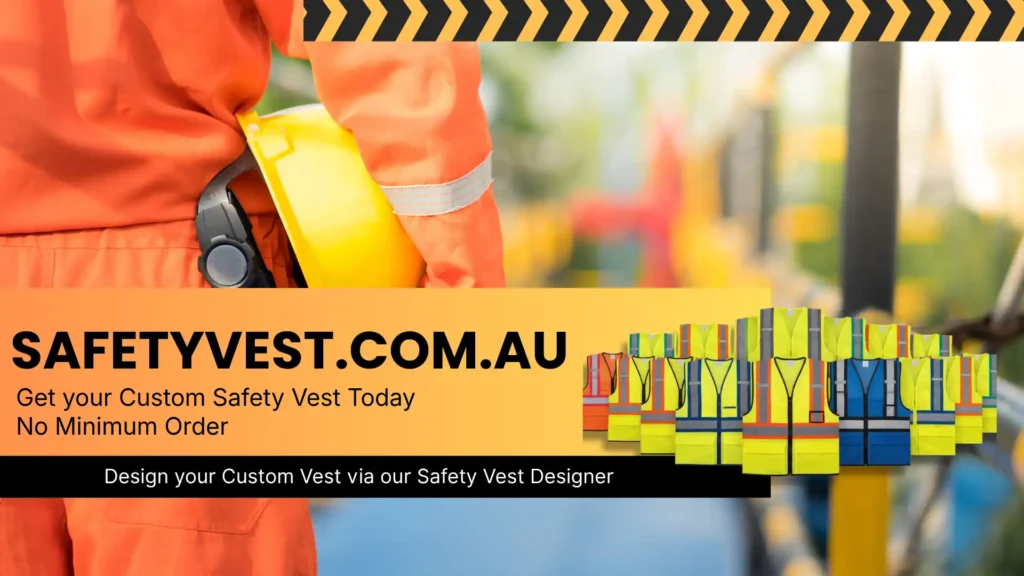
When the sun is blazing over a regional tower site and a crew is hoisting a massive antenna, the last thing anyone wants is a hidden slip or a missed signal because someone blends into the background. That’s why the right safety vest for telecommunications workers in Australia isn’t just a uniform – it’s a lifeline. In the next few minutes you’ll discover how to choose a vest that keeps crews visible on high‑rise ladders, protects against electrical arcs, and meets every state regulator’s demand. We’ll walk through the essential features, the step‑by‑step ordering process, the compliance landscape, common field‑level blunders, and where telecom fits into the broader safety‑vest market.
Contents
- What makes a telecom safety vest essential?
- How to pick the right vest – a practical breakdown
- Compliance and Australian standards you must obey
- Mistakes site managers often make on Australian worksites
- Telecom in the context of other industries we serve
- Frequently Asked Questions
- Key take‑aways and next steps
What makes a telecom safety vest essential?
Featured snippet: A safety vest for telecommunications workers in Australia must combine high‑visibility colour, full‑torso retro‑reflective tape of at least 50 mm, and, where electrical work is performed, flame‑resistant or arc‑rated fabrics that comply with AS/NZS 2980.
Why does this matter? Telecommunications crews spend long hours perched on ladders, on rooftops, or beside live cables in every weather condition imaginable. The Australian landscape – from dusty outback sites to humid coastal exchanges – demands garments that stay bright under UV, stay cool in heat, and stay intact when exposed to sparks. A vest that only flashes during daylight but fades after a few weeks leaves workers exposed to the same hazards that a plain shirt would.
The short answer is visibility plus protection. Colour matters: only fluorescent yellow‑green or orange‑red are legal under AS/NZS 4602.1. Tape matters: minimum 50 mm width, wrapped around the torso, ensures a driver or heavy‑equipment operator can spot a technician from a distance, even at night. For telecoms who routinely de‑energise or test live lines, the vest’s fabric must also withstand arc flash – the same requirement that mining and gas sectors face under AS/NZS 2980.
At Safety Vest Australia we supply more than a dozen thousand custom‑printed vests a year, and every one is built to survive a typical 8‑hour shift on a tower, a wind‑blown crane platform, or a storm‑soaked car park.
How to pick the right vest – a practical breakdown
Below is a quick step‑by‑step guide you can print and hand to your procurement officer. Follow it in order and you’ll avoid costly re‑orders.
- Identify the work environment – Is the crew on a high‑rise tower, a street‑level cabinet, or a remote field site?
- Choose the vest class –
- Class D/N – day & night visibility, suitable for most telecom tasks away from live traffic.
- Class R – required if technicians operate near moving vehicles or roadworks (e.g., installing roadside cabinets).
- Select fabric type –
- Classic Zip‑Front Hi‑Vis (Class D/N) – durable, easy to replace.
- Mesh Hi‑Vis – breathable for summer climbs.
- Flame‑Resistant (FR) Vest – arc‑rated for live‑line maintenance; meets AS/NZS 2980.
- Decide on customisation – screen print the company logo, add reflective name tags, or use heat‑transfer for a full‑colour design. Upload AI, EPS, PDF, PNG or SVG files directly to our live vest designer.
- Check sizing – our range runs from XS to 7XL; ensure you order a size chart (available on the product page).
- Order quantity – No minimum order means even a single replacement vest can be printed instantly; volume discounts kick in at 25, 50, 100, and 500+ units.
- Confirm delivery details – Standard 5‑7 business day shipping reaches metropolitan, regional and remote sites; express options are available for urgent roll‑outs.
| Feature | Classic Zip‑Front | Mesh Hi‑Vis | Flame‑Resistant (FR) |
|---|---|---|---|
| Best for | General telecom tasks, indoor/outdoor | Hot climates, summer climbs | Live‑line work, arc‑flash risk |
| Visibility class | D/N | D/N | D/N (with FR rating) |
| Breathability | Moderate | High | Moderate |
| Compliance | AS/NZS 4602.1 | AS/NZS 4602.1 | AS/NZS 4602.1 + AS/NZS 2980 |
| Colour options | Fluoro Yellow‑Green / Orange‑Red | Same | Same |
| Custom print | Screen/DTF/Embroidery | Screen/DTF | Screen/DTF/Embroidery |
Once the checklist is complete, head to our custom safety vests page, use the live designer, and request a quote. Because we charge no set‑up fees or artwork charges, the price you see is the price you pay.
Compliance and Australian standards you must obey
Any vest you place on a telecommunication crew must meet the primary high‑visibility standard AS/NZS 4602.1:2011. This dictates colour, minimum tape width (50 mm), and the requirement that reflective tape encircles the full torso. The standard also outlines the performance of retro‑reflective material under AS/NZS 1906.4, ensuring the tape reflects a defined amount of light at specific angles – crucial for night‑time repairs on a dark highway.
If the work involves any exposure to energized conductors, the garment must also satisfy AS/NZS 2980, which tests for flame resistance and arc‑rating. The vest’s fabric is examined for ignition resistance, melt‑through, and heat transfer properties. Failure to meet this can result in a penalty of up to $1.5 million under the WHS Category 2 provisions in NSW, as enforced by SafeWork NSW. Other jurisdictions – WorkSafe Victoria, WHS Queensland, and their equivalents – follow identical penalty structures.
Our compliance guide breaks down each clause, but a quick reminder:
- Class D – suitable for daylight only, no reflective tape required.
- Class D/N – day & night, must have reflective tape (minimum 50 mm).
- Class R – mandatory for any activity within 15 m of moving traffic or live roadwork.
All colours must be fluorescent yellow‑green or orange‑red – any other hue, even if bright, is non‑compliant. The enforcement bodies conduct random site inspections; a single non‑conforming vest can trigger an audit and a stop‑work order.
Mistakes site managers often make on Australian worksites
-
Choosing the wrong colour – Some managers think “bright blue” will stand out. The law doesn’t recognise it, and workers can be cited for non‑compliance.
-
Under‑estimating tape width – A common shortcut is to buy a vest with a thin strip of reflective material to save money. That strip often measures 30 mm, well below the 50 mm mandate, meaning the vest fails the retro‑reflective test.
-
Ignoring arc‑rating for live‑line duties – Many crews wear the same Classic Zip‑Front vest for both indoor cabling and live‑line maintenance. When a fault occurs, the fabric can melt, causing severe burns.
-
Failing to replace worn vests – UV exposure degrades fluorescent dyes. After roughly 12 months of regular outdoor use, colour fades below the 70 % reflectivity threshold. Yet many sites keep the same vest until it’s torn.
-
Not providing enough sizes – A one‑size‑fits‑all approach leads to ill‑fitting vests, which tumble around during ladder work and can snag on equipment. The result: reduced mobility and a higher chance of tripping.
The field reality is that a small oversight—like ordering a non‑arc‑rated vest for a live‑line task—can cost thousands in lost time, equipment damage, and potential legal action.
Telecom in the context of other industries we serve
Telecommunications shares visibility challenges with construction, traffic control, and mining, yet it also brings unique constraints. For instance, a construction crew on a site office may be stationary most of the day, whereas a telecom technician is frequently climbing a 30‑metre tower with a tool belt and a cable drum. The Surveyor Multi‑Pocket Vest—popular on our construction side—offers ten pockets for tools, but on a tower the extra weight can destabilise a harness.
In traffic‑control projects, the Class R Traffic Control Vest is mandated because of proximity to moving vehicles. A telecom crew installing a roadside cabinet also falls under the same rule, meaning they should switch to the Class R vest for that task.
Mining and resources workers often need FR garments for arc‑flash. Telecom’s own live‑line specialists match this requirement, so the Flame‑Resistant (FR) Vest serves both sectors seamlessly.
Schools and education programmes are another niche we cover with Kids Hi‑Vis Vests – perfect for work‑experience days on a school‑run mini‑tower project, teaching next‑gen technicians the importance of visibility early on.
By selecting a vest that ticks the right boxes for telecom, you automatically gain a solution that can be repurposed across construction sites, road‑work zones, and even event crowd‑control booths – a genuine cost‑saving synergy.
Frequently Asked Questions
Q: Do I need a Class R vest for installing a roadside telecom cabinet?
A: Yes. If the cabinet is within 15 m of moving traffic, the law requires a Class R vest with high‑coverage retro‑reflective tape, as outlined in AS 1742.3.
Q: How often should I replace my high‑visibility vests?
A: Australian standards recommend replacement when colour fades below 70 % reflectivity, usually after 12 months of regular outdoor use, or immediately if the vest is torn or the tape is damaged.
Q: Can I order a single FR vest for a specialist technician?
A: Absolutely. We accept single‑vest orders with no minimum, and there are no set‑up or artwork fees, even for flame‑resistant models.
Q: Are mesh vests allowed on high‑altitude tower climbs?
A: Mesh vests meet the high‑visibility requirements as long as they are Class D/N with the correct tape width. They are ideal for hot conditions because the open weave improves breathability.
Q: What file formats does your live designer accept for logos?
A: We accept AI, EPS, PDF, PNG and SVG. Upload directly on the custom safety vests page and preview the result instantly.
Key take‑aways and next steps
- Visibility plus protection – For telecom crews, a vest must be Class D/N or R, fluorescent yellow‑green or orange‑red, with 50 mm retro‑reflective tape, and, where live‑line work occurs, flame‑resistant fabric compliant with AS/NZS 2980.
- Follow the checklist – Identify environment, select class, choose fabric, order the right size, and confirm delivery. Using our live designer removes guesswork and eliminates set‑up costs.
- Stay compliant – Regularly audit vest condition, replace faded garments, and ensure the correct class is used for each task to avoid fines from SafeWork NSW, WorkSafe Victoria, WHS Queensland and other authorities.
Ready to equip your telecom team with vests that meet every Australian requirement and survive the harshest conditions? Get a no‑obligation quote or speak directly to our safety‑vest specialists via the contact us page. Your crew’s visibility, safety and compliance start with the right vest – let us help you choose it.