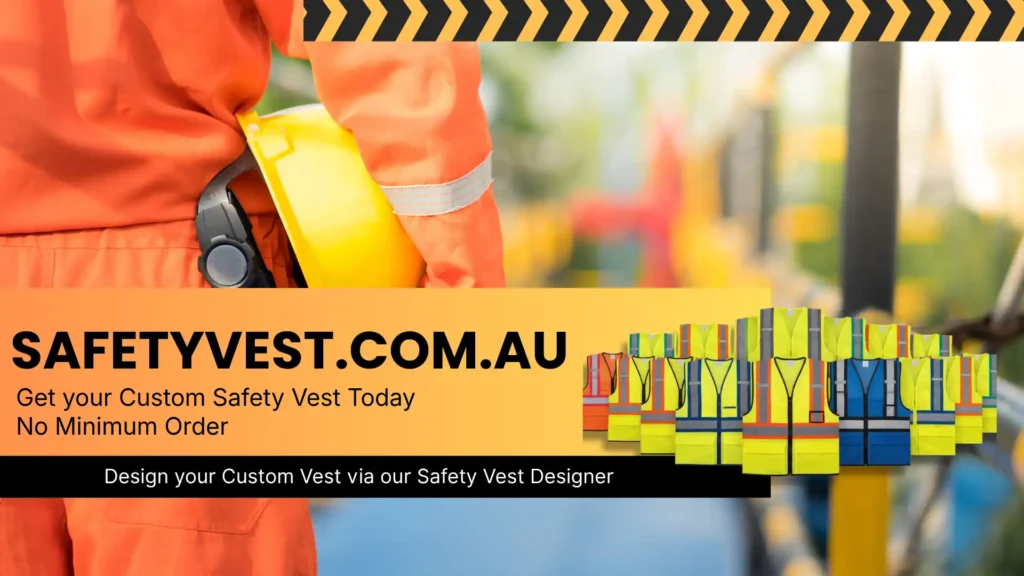
When a pipe bursts on a bustling Sydney street, the first thing you’ll see isn’t the water spray—it’s a line of workers in bright, reflective vests directing traffic, sealing joints, and keeping the public safe. Those high‑visibility garments do more than make the crew easy to spot; they are a legal requirement and a vital piece of personal‑protective equipment (PPE) that can mean the difference between a smooth repair and a costly, dangerous incident.
In the next few minutes you’ll discover exactly why Hi‑Vis Vests for Sydney Water maintenance workers are non‑negotiable, how to choose the right style for varied site conditions, which Australian standards must be met, common pitfalls that bite site managers, and practical tips for ordering customised, compliant gear that arrives on time—everywhere from the CBD to a remote regional depot.
Contents
- What makes a hi‑vis vest essential for Sydney Water crews?
- Choosing the right vest: a step‑by‑step guide
- Compliance and Australian standards you can’t ignore
- Typical mistakes Sydney Water sites make with hi‑vis PPE
- Hi‑vis vest requirements across water‑related industries
- Frequently Asked Questions
- Key takeaways and next steps
What makes a hi‑vis vest essential for Sydney Water crews?
A hi‑vis vest is the simplest, most effective way to protect maintenance workers from collisions and ensure they are seen in low‑light or adverse weather conditions.
Sydney Water teams operate around the clock, often in close proximity to traffic, machinery, and the public. A vest that complies with AS/NZS 4602.1 :2011 provides fluorescent colour and retro‑reflective tape that is instantly recognisable, even in rain or at dusk. The garment’s design also accommodates tool pockets, high‑visibility sleeves, and breathable fabrics—crucial for men and women working long shifts in summer heat or rainy winter mornings.
Why it matters:
- Visibility saves lives. Studies by Australian safety agencies consistently show a reduction in vehicle‑worker incidents when workers wear Class R or D/N garments in high‑risk zones.
- Legal compliance. SafeWork NSW and other state WHS regulators can issue heavy fines—up to $1.5 million for a body corporate—if a site fails to provide appropriate high‑visibility PPE.
- Brand consistency. Custom branding on a vest reinforces Sydney Water’s professional image while keeping the crew identifiable to the public.
For Sydney Water maintenance crews, the right hi‑vis vest combines safety, comfort, and compliance—no compromises.
Choosing the right vest: a step‑by‑step guide
| Vest type | Best for | Key features | Typical use on Sydney Water sites |
|---|---|---|---|
| Classic Zip‑Front Hi‑Vis (Class D/N) | General maintenance, pipe repairs, valve replacements | Full‑torso 50 mm reflective tape, zip front for easy on/off, screen‑print or embroidery branding | Day‑time works in residential streets, where traffic is moderate |
| Mesh Hi‑Vis Vest | Hot summer days, outdoor pump stations | Breathable open‑weave, same retro‑reflective coverage, logo printed on front | Summer inspections of storm‑water infrastructure |
| Surveyor Multi‑Pocket Vest | Engineers, supervisors, site leads | 10+ pockets, reinforced stitching, optional high‑visibility sleeves | Carrying tools, tablets, and documentation during large‑scale pipe‑bursts |
| Flame‑Resistant (FR) Vest | Hot‑work or arc‑flash environments, e.g., welding on pipe joints | AS/NZS 2980 arc‑rated, Class D/N tape, sturdy fabric | Maintenance crews performing hot‑work on underground mains |
| Traffic Control Vest (Class R) | Works near live traffic, road‑crossings, detour setups | High‑coverage retro‑reflective tape, fluorescent orange‑red, meets AS 1742.3 | Coordinating traffic during emergency shut‑downs on main roads |
Step‑by‑step selection process
- Identify the work environment – Is the crew on a quiet residential lane or a busy arterial road? Choose Class R for road‑adjacent duties, otherwise Class D/N suffices.
- Assess temperature and comfort needs – For summer repairs, the Mesh Hi‑Vis vest prevents overheating. In cooler months, a heavier fabric may be preferable.
- Determine pocket requirements – Engineers need multiple pockets; a simple zip‑front vest works for labourers.
- Check for flame‑risk – If any hot‑work is planned, the FR vest is mandatory under AS/NZS 2980.
- Confirm size range – Sydney Water staff vary widely; order from XS to 7XL to avoid ill‑fitting gear.
- Select customisation method – Screen‑print for large runs, DTF or heat‑transfer for detailed logos, embroidery for a premium look.
Following this checklist ensures you order a vest that protects every worker, every shift, without unnecessary extras.
Compliance and Australian standards you can’t ignore
Every hi‑vis vest supplied to a Sydney Water site must meet the primary standard AS/NZS 4602.1:2011 – High Visibility Safety Garments. This standard dictates fluorescent colour (yellow‑green or orange‑red only), minimum retro‑reflective tape width (50 mm), and the requirement that the tape encircles the full torso.
For traffic‑control duties, the vest class upgrades to Class R, which is specifically referenced in AS 1742.3 – Manual of Uniform Traffic Control Devices. This class demands a higher proportion of reflective tape and is compulsory wherever workers operate adjacent to live traffic.
If any hot‑work is involved, the AS/NZS 2980 standard for flame‑resistant garments applies. It defines arc‑rating levels and test methods, ensuring the vest will not ignite or melt under electric arc exposure.
Enforcement falls to state WHS bodies: SafeWork NSW, WorkSafe Victoria, WHS Queensland, and their equivalents. These regulators audit PPE on site, and non‑compliant vest usage can trigger improvement notices or hefty penalties—up to $1.5 million for a body corporate in NSW.
Our Compliance Guide (see the linked page) walks you through each requirement, provides visual checklists, and even offers a printable audit sheet for site supervisors.
Typical mistakes Sydney Water sites make with hi‑vis PPE
Here’s the thing: even seasoned site managers can slip up when it comes to high‑visibility gear.
- Using the wrong colour – Some crews opt for a bright blue or neon pink because it “looks nice” on the logo. Under AS/NZS 4602.1 only fluorescent yellow‑green or orange‑red are legal; the wrong hue can invalidate the whole PPE set.
- Undersized retro‑reflective tape – A common shortcut is to apply a narrow 30 mm strip around the chest only. The standard demands a minimum 50 mm strip that wraps the torso, plus additional side panels for Class R.
- Re‑using damaged vests – Over time, tape can peel, colours fade, or seams split. A vest that looks worn may no longer meet the required optical performance, putting workers at risk.
- Skipping the size audit – Ordering a single size for an entire crew seems efficient, but ill‑fitting vests compromise both comfort and visibility—loose fabric can billow, creating gaps in reflective coverage.
- Neglecting customisation deadlines – Last‑minute logo changes often lead to rushed production, which can introduce errors in placement or colour matching.
Avoiding these pitfalls saves time, money, and most importantly, keeps crews safe on the ground.
Hi‑vis vest requirements across water‑related industries
Sydney Water isn’t the only entity needing robust high‑visibility apparel. The broader water‑infrastructure sector—storm‑water councils, regional water boards, and private contractors—faces similar challenges.
- Construction of new pipelines – Workers excavating near roadways must wear Class R vests, while those inside the trench can use Class D/N.
- Dam and reservoir maintenance – The heat‑resistant FR vest becomes vital when welding steel walkways or scaffolding.
- School‑based water education programmes – Kids participating in “young water‑watch” tours need the Kids Hi‑Vis Vest (sizes 4‑14) to stay visible to teachers and motorists alike.
Because we ship to metro, regional, and remote locations with tracked delivery, even a remote water‑treatment plant can receive a batch of customised vests in the standard 5–7 business‑day window—express service is available if a sudden pipe‑burst emergency demands immediate gear.
Frequently Asked Questions
Q: Do Sydney Water crews need Class R vests for all pipe‑burst repairs?
A: Not always. Class R is mandatory only when workers are within 30 m of live traffic or on a road that remains open to vehicles. For internal pipe‑line work or closed streets, a Class D/N vest meets the visibility requirement.
Q: How often should we replace hi‑vis vests?
A: Replace any vest whose fluorescent colour fades noticeably, whose retro‑reflective tape is peeling, or after a high‑impact incident. A practical rule of thumb is a three‑year service life for normal wear, but a visual inspection each quarter is advisable.
Q: Can we order a single custom‑printed vest for a new supervisor?
A: Absolutely. We have no minimum order, and there are no setup or artwork fees. Upload your logo in AI, EPS, PDF, PNG, or SVG, choose screen‑print or embroidery, and the vest ships within 5–7 business days.
Q: Are there special considerations for hot‑day work on open‑air pipelines?
A: Yes. Mesh Hi‑Vis vests provide breathability while retaining the required 50 mm reflective tape. Pair them with a wide‑brim hat and high‑visibility sleeves for added limb protection.
Q: What if a contractor supplies non‑compliant vests?
A: The site supervisor must request a compliance audit immediately. Under SafeWork NSW, non‑compliant PPE can lead to an improvement notice and, if unaddressed, a penalty of up to $1.5 million for the principal contractor.
Key takeaways and next steps
- Visibility is a legal and practical necessity – Ensure every Sydney Water maintenance worker wears a vest that meets the correct class (D/N or R) and colour standard.
- Match the vest to the task – Use mesh for hot weather, multi‑pocket designs for engineers, and FR‐rated garments for any hot‑work activity.
- Stay compliant – Follow AS/NZS 4602.1, AS 1742.3, and AS/NZS 2980 where relevant, and keep records for SafeWork inspections.
If you’re ready to outfit your crew with compliant, comfortable hi‑vis apparel—whether it’s a single customised vest or a bulk order—our online live vest designer makes it quick and straightforward. For a no‑obligation quote, head to our Contact Us page or explore the full range of options on the Custom Safety Vests hub.