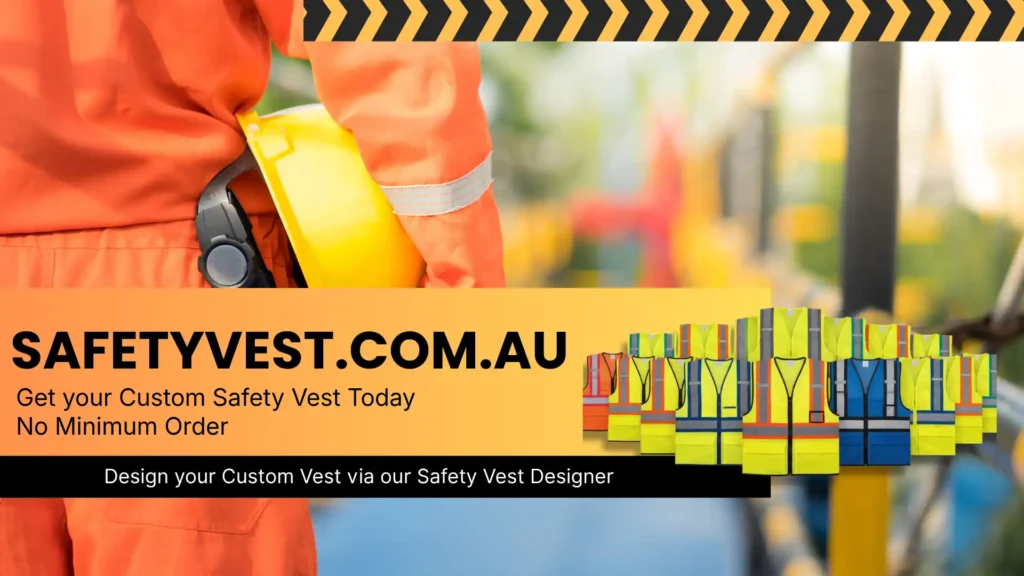
When a miner’s foreman points to a flashing light and shouts “Check the panel – it’s live!” you can almost hear the adrenaline surge through the crew. The electrician drops his toolbox, rigs a harness, and darts across the pit, his vest a bright stripe of safety in the dim, dust‑choked twilight. If that vest isn’t up to standard, a simple misstep can turn a routine switch‑over into a catastrophic incident.
In this guide you’ll learn exactly what high‑visibility (hi‑vis) gear Australian mining electricians must wear, how to pick the right class and colour, and which standards keep the worksite safe. We’ll break down the step‑by‑step process for checking compliance, flag the most common field‑level slip‑ups, and show how a custom‑designed safety vest from SafetyVest.com.au can keep you both compliant and comfortable on the job.
Contents
- What hi‑vis compliance means for electricians on a mine
- Practical breakdown: choosing the right vest, colour, and fit
- Compliance and Australian standards angle
- Common mistakes or misconceptions on Australian worksites
- Industry‑specific context: mining, construction, and beyond
- Frequently Asked Questions
- Key takeaways and next steps
What hi‑vis compliance means for electricians on a mine
Featured snippet: Electricians on Australian mining sites must wear a Class D/N or Class R hi‑vis vest that meets AS/NZS 4602.1:2011, uses the approved fluorescent yellow‑green or orange‑red colour, and includes a minimum 50 mm retro‑reflective tape band that encircles the entire torso.
Why does this matter? Mining environments combine low lighting, heavy machinery, and high voltage—all at once. A vest that shines brightly in daylight but disappears in the night‑shift darkness or under a dust cloud does little to protect the wearer. The right class of hi‑vis garment ensures visibility both in ambient daylight (Class D) and under artificial lighting or at night (Class N), while Class R adds the extra reflective coverage required around live traffic routes or haul‑roads.
Electricians are often the first to move between plant rooms, ventilation shafts, and open‑pit areas, making them high‑risk for being missed by forklift operators or crane drivers. The Australian standards were introduced exactly to prevent those “you didn’t see me” moments.
A compliant vest does more than tick a box; it reduces the likelihood of electrocution, struck‑by incidents, and costly WHS investigations. In NSW alone, the maximum WHS Category 2 penalty for a body corporate can reach $1.5 million – a figure that makes even the most budget‑conscious manager sit up straight.
Practical breakdown: choosing the right vest, colour, and fit
Below is a concise step‑by‑step checklist electricians can use when ordering or inspecting a hi‑vis vest for a mining operation.
| Step | Action | What to look for |
|---|---|---|
| 1 | Identify the work‑area class | Class D/N for general plant work; Class R if the electrician will be near haul‑roads or live traffic. |
| 2 | Verify colour | Fluorescent yellow‑green or orange‑red only – no blends, no pastel shades. |
| 3 | Check retro‑reflective tape | Minimum 50 mm wide, continuous band around the torso, high‑performance tape meeting AS/NZS 1906.4. |
| 4 | Confirm size & fit | XS‑7XL available; vest should sit snugly over the shoulders without restricting movement. |
| 5 | Review customisation | Screen‑print or embroidery of company logo (AI, EPS, PNG, SVG accepted) – no extra charge or setup fees. |
| 6 | Validate certification | Tag or label referencing AS/NZS 4602.1:2011 and the vest class. |
| 7 | Test durability | Verify seam reinforcement for mining wear and tear; mesh options are preferable in hot underground sections. |
How to apply the checklist on site
- Grab a sample vest from the site store.
- Hold it up to a handheld lamp – the reflective tape should glint from at least 12 m away.
- Measure the tape with a ruler; confirm it’s 50 mm or more.
- Slip the vest over a full‑size work shirt – no gaps at the sleeves or waist.
If any point fails, the vest is non‑compliant and must be replaced before the electrician returns to the live line.
Compliance and Australian standards angle
The cornerstone of hi‑vis safety in the mining sector is AS/NZS 4602.1:2011 – High Visibility Safety Garments. This standard outlines the performance requirements for colour, luminance, and retro‑reflectivity. For electricians working near moving plant, the AS 1742.3 (Traffic control garments) often applies, mandating the Class R specification.
Key clauses to reference
- Clause 3.2 – Only the two approved hi‑vis colours may be used.
- Clause 4.1 – Minimum retro‑reflective tape width of 50 mm, encircling the torso, with a reflectivity factor of at least 160 cd·lx⁻¹.
- Clause 5.5 – Class D (day only) versus Class D/N (day & night) – electricians who may work after dark must have the N component.
Enforcement falls to state WHS regulators: SafeWork NSW, WorkSafe Victoria, and WHS Queensland. These bodies conduct regular site audits and can issue improvement notices or, in severe cases, prosecute under the Work Health and Safety Act 2011 (NSW), which carries the $1.5 million penalty ceiling.
Our Compliance Guide breaks down each standard in plain English, and our product pages list the exact class each vest meets, so you can cross‑reference on the fly.
Common mistakes or misconceptions on Australian worksites
-
“Any bright colour will do.”
The reality: fluorescent yellow‑green and orange‑red are the only colours recognised by AS/NZS 4602.1. A neon pink or lime shirt looks bright but offers zero legal protection. -
“If the vest looks reflective, it’s fine.”
Not all reflective tape meets the 160 cd·lx⁻¹ threshold. Cheap overseas tape can lose its shine after a single wash, leaving workers invisible to crane operators. -
“One size fits all.”
A vest that’s too loose can flap in the wind, creating false silhouettes that confuse machine operators. Conversely, a tight vest may restrict movement around equipment, leading electricians to remove it altogether. -
“We can reuse old vests after a wash.”
Mining dust and UV exposure degrade the luminance of the fabric over time. The standards require the garment to retain its performance for at least 12 months of regular use. -
“Only the front needs tape.”
The tape must encircle the torso. Front‑only tape leaves the back exposed on a night shift when workers face away from the light source.
Field supervisors who overlook these details often end up with non‑compliant gear and, ultimately, a Stop Work Authority (SWA) issued by SafeWork NSW.
Industry‑specific context
Mining & Resources
In underground coal mines, ambient light can drop below 0.1 lux. Electricians must wear a Class D/N vest with mesh panels to combat heat and maintain breathability. The mesh version from our catalogue also reduces the risk of static discharge – a small but worthwhile benefit when working near live cables.
Construction & Building
On a surface‑level mining support structure, electricians often work at the edge of haul‑roads. Here, a Class R traffic control vest provides the extra reflective coverage required by AS 1742.3, keeping them visible to heavy‑haul trucks that travel at 80 km/h.
Events & Crowd Control
When a mining company hosts an open‑day, electricians may be stationed near public walkways. Switching to a Kids Hi‑Vis vest for apprentices under 18 ensures they meet the same colour standards while fitting smaller frames.
Across all these scenarios, the ability to order a single custom‑printed vest—no minimum order, no setup fee—means site managers can react quickly to staffing changes without inventory waste. Our live online vest designer lets you preview the logo placement before you click “order,” and typical delivery sits at 5–7 business days, even to remote outback sites.
Frequently Asked Questions
Q: Do electricians need a Class R vest on a mine that doesn’t have public road access?
A: If the electrician works near any moving plant—haul trucks, excavators, or conveyor belts—AS 1742.3 classifies that as a high‑risk area, so a Class R vest is required regardless of public road status.
Q: How often should hi‑vis vests be inspected on a mining site?
A: Conduct a visual check at the start of each shift. Look for faded colour, cracked seams, or missing reflective tape. Replace any vest that shows wear beyond 12 months of service.
Q: Can a standard high‑vis vest be used for electrical arc‑flash protection?
A: No. For arc‑flash work you need a garment that meets AS/NZS 2980 (flame‑resistant). Our FR vest combines flame‑resistance with hi‑vis colour, but it must still meet the 50 mm tape requirement.
Q: Are there any tax or rebate incentives for buying compliant hi‑vis gear in Australia?
A: Some state WHS programmes offer safety‑equipment grants for small‑to‑medium enterprises, but eligibility varies. Check with SafeWork NSW’s “Safety Grants” page for the latest options.
Q: What file formats does SafetyVest accept for custom logo work?
A: We accept AI, EPS, PDF, PNG, and SVG. There are no artwork or setup charges, and the design appears instantly in our online live vest designer.
Key takeaways and next steps
- Choose the correct class and colour – Class D/N for day/night plant work, Class R when near moving traffic; only fluorescent yellow‑green or orange‑red are legal.
- Confirm the 50 mm continuous retro‑reflective band – it must meet AS/NZS 1906.4 performance levels and encircle the torso.
- Fit matters – XS‑7XL sizing ensures the vest stays in place, while mesh options keep electricians cool in hot underground sections.
Ready to upgrade your crew’s hi‑vis safety? Our custom‑design service lets you add your logo with no extra fee and ships anywhere in Australia within 5–7 business days. Get a quote today via our Contact page or start designing your vest online at the Custom Safety Vests hub.
Stay visible, stay safe – and keep your mining operation compliant with the Australian standards that protect both people and profit.