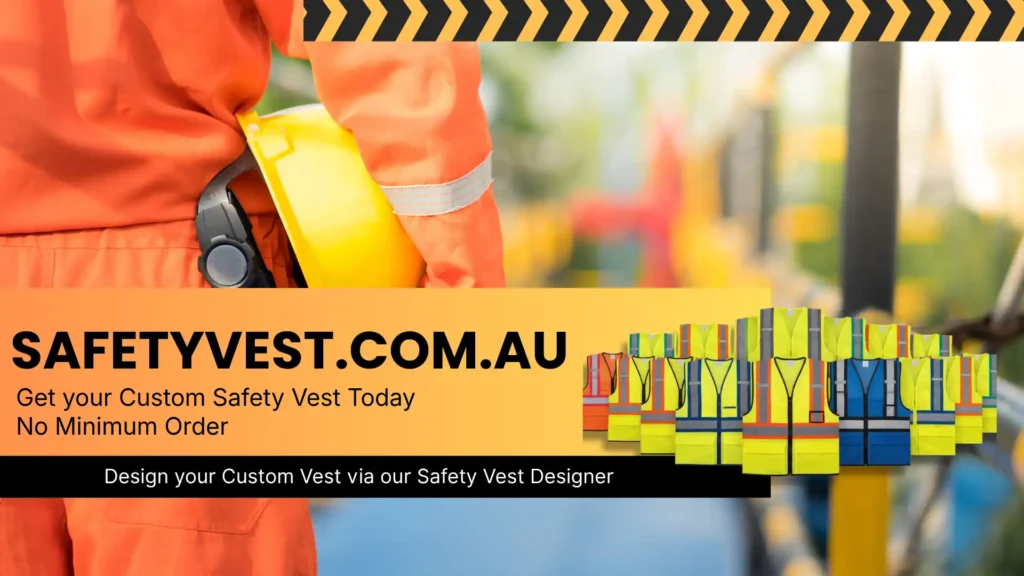
Safety Vests for Construction Site Visitors in Australia: What to Provide
A subcontractor’s site manager once let a group of overseas engineers walk the perimeter without any hi‑vis gear. Within minutes a delivery truck backed into their lane, the driver couldn’t see them until it was too late and the incident shut the site for an entire day. The fine? A $15,000 penalty from SafeWork NSW and a bruised reputation that still haunts the company.
The lesson is simple: every visitor – from client reps to delivery drivers – must be fitted with the right safety vest the moment they step onto a construction site. Supplying compliant, high‑visibility vests isn’t just a box‑ticking exercise; it’s a frontline defence against costly injuries and regulatory action. Below we break down exactly what to provide, why it matters, and how to avoid the common pitfalls that trip up many Australian sites.
Which Vest Class Does a Visitor Need?
| Visitor type | Typical activity | Required vest class* |
|---|---|---|
| Office or client representatives (touring the site) | Walking on roads and inside plant zones | Class R (Roadwork) |
| Delivery drivers, plant operators | Moving vehicles or equipment in low‑light | Class D/N (Day/Night) |
| Contractors’ labourers or temporary workers | General site walk‑about, daytime only | Class D (Day) |
| Emergency services / rescue teams | Nighttime or low‑visibility conditions | Class D/N (Day/Night) |
*All vests must meet AS/NZS 1906.4 for reflective tape (minimum 50 mm wide, encircling the torso) and be made in either fluorescent yellow‑green or fluorescent orange‑red as stipulated by AS/NZS 4602.1 and AS 1742.3.
Practical Tool: Visitor‑Vest Checklist
- Identify visitor category – client, supplier, emergency crew, etc.
- Select correct class – see table above.
- Confirm colour – yellow‑green for general, orange‑red for high‑risk roadwork.
- Check reflective tape – 50 mm width, continuous around torso, no gaps.
- Inspect for damage – faded strips, tears, missing fasteners.
- Fit on‑site – ensure the vest sits comfortably over clothing, sleeves free, and the wearer can move safely.
- Record issuance – sign‑off log with visitor name, date, and vest class.
Keep a printed copy at the site gate; a quick visual audit saves headaches later.
Where Sites Go Wrong
- Wrong vest class – Giving a visitor a Class D vest when they’ll be driving a truck at dusk. The vest isn’t illuminated enough for night conditions, breaching AS/NZS 1906.4 and exposing the site to fines.
- Faded hi‑vis – Sun‑bleached tape may still look bright to the naked eye but fails the 50 mm reflectivity test required by WorkSafe Victoria.
- Cheap imports – Unbranded overseas vests often miss the Australian colour‑shift and reflective standards, leading to non‑compliance notices.
- Branding over tape – Large logos printed over reflective strips negate the tape’s visibility, a frequent oversight when companies try to “personalise” gear.
These errors are the quickest route to a SafeWork NSW inspection and a potential shutdown.
Industry Examples: Real‑World Vest Use
Construction
A multi‑million‑dollar tower project in Melbourne required every visitor to wear a Class R orange‑red vest. The site manager partnered with Safety Vest to order custom‑branded vests that left the reflective tape untouched, ensuring both compliance and brand visibility. No incidents were recorded during the 12‑month period.
Traffic Control
During a road‑upgrade in Queensland, temporary traffic controllers were hired from an external agency. The agency supplied Class D/N yellow‑green vests that met AS/NZS 1906.4 but lacked the required night‑time retro‑reflective tape on the arms. After a near‑miss with a night‑time truck, the site upgraded the vests to full‑torso encircling tape, eliminating the risk.
Warehousing & Logistics
A large distribution centre in Perth used an in‑house visitor‑management system that automatically printed a badge and handed out a Class D vest for contractors. The system was updated to flag any visitor scheduled after 6 pm, automatically issuing a Class D/N vest instead – a simple workflow change that kept night shifts safe.
Mining
In a remote Western Australian mine, all visitors must sign a safety induction and are then issued a Class D/N vest with high‑visibility tape meeting AS/NZS 2980 (mining‑specific). The vest’s durability matched the harsh environment, preventing colour fade despite the dusty conditions.
Events
A large outdoor music festival hired a crowd‑control crew that needed to move between stage setups at dusk. Providing Class D/N vests with reflective tape around the entire torso meant crew members were visible to security cameras and emergency services, smoothing the night‑time shutdown.
Frequently Asked Questions
Do I need a different vest for each visitor?
Only if their activities differ in lighting or mobility. Most sites can streamline by using Class D/N for anyone who might be on‑site after dark.
Can I add my company logo on the vest?
Yes, but keep the logo away from the reflective strips. Placing a large logo over the tape defeats the purpose and breaches AS/NZS 1906.4.
What if a visitor refuses to wear the vest?
Treat it as a breach of the site safety plan. Politely explain the legal requirement and, if necessary, deny site entry until compliance is achieved.
How often should vests be inspected?
At least once a month, or after any incident that could damage the garment. Replace any vest with faded tape, torn seams, or missing fasteners.
Getting the Right Vests Without the Hassle
For sites that need a reliable supply chain, Safety Vest works directly with Sands Industries – the Australian manufacturer behind most of the market‑leading hi‑vis apparel. Their local production means quick turn‑arounds, full compliance with AS/NZS 4602.1, and the ability to customise colour and branding without compromising safety.
If you’re unsure which class to purchase or need a batch of visitor‑specific vests, start with the Compliance Guide and then explore the Custom Safety Vests page for colour and logo options.
Key takeaways:
- Match vest class to the visitor’s activity and lighting conditions.
- Stick to the Australian standards for colour, tape width, and placement.
- Use a simple checklist to keep issuance consistent and documented.
- Avoid common mistakes like wrong classes, faded tape, or branding over reflective strips.
A well‑managed visitor‑vest programme saves time, money, and most importantly, keeps people safe. Need a quote or a quick chat about the right vest for your next visitor intake? Reach out to the team at Safety Vest – we’ll get you set up in no time.