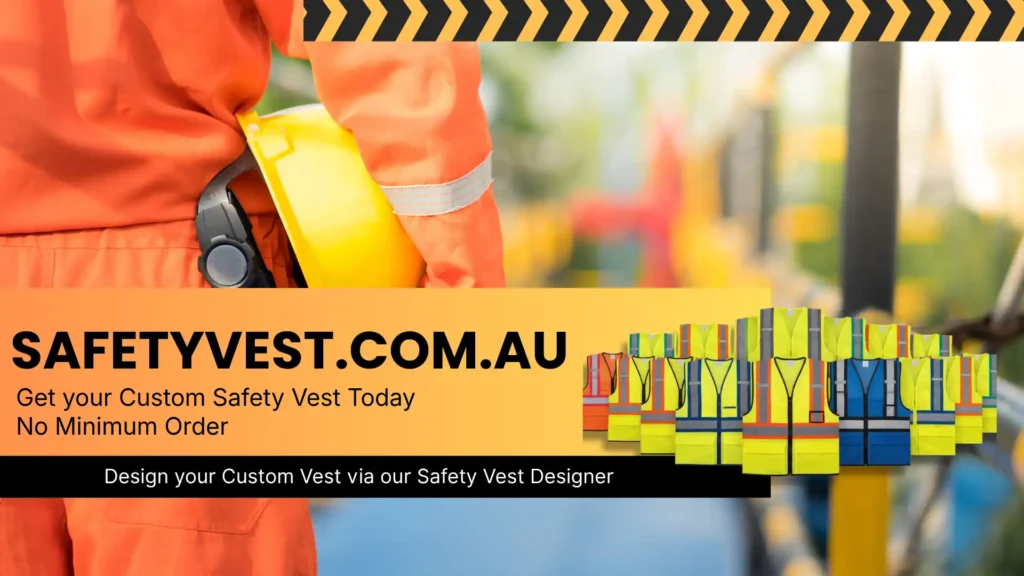
Can You Reorder Custom Safety Vests from a Previous Artwork File in Australia?
It was a sweltering Tuesday on a construction site north of Melbourne. A foreman handed out fresh‑look hi‑vis vests, only to discover the logo was printed backwards. The crew had to stop work, re‑label the vests and re‑issue safety gear – a delay that cost the contractor $3 000 in overtime and put the site at risk of non‑compliance with SafeWork NSW. The mishap happened because the original artwork file was tossed in a shared drive and then edited incorrectly when the order was placed again.
If you’ve ever needed to top‑up a stock of branded safety vests, the question looms: Can you reorder custom safety vests from a previous artwork file in Australia? The short answer is yes, but only if you follow a solid process that meets Australian standards and avoids the pitfalls that cost time and money.
How Re‑ordering Works – A Practical Guide
- Locate the original approved artwork – the PDF or AI file that was used for the first run. It must include the correct colour values (fluorescent yellow‑green or orange‑red) and the exact placement of reflective tape according to AS/NZS 1906.4.
- Verify the vest class – check whether the vests are Class D (day), Class N (night), Class D/N (day/night) or Class R (roadwork). The class cannot be changed without a new design brief.
- Confirm compliance stamps – the file should carry the AS 4602.1 compliance label and the AS 2980 test reference for the reflective materials.
- Run a colour proof – even if the artwork is unchanged, a digital proof ensures the fluorescent dye hasn’t faded in the file’s RGB/CMYK conversion.
- Submit the file to your supplier – for safetyvest.com.au, use the Custom Safety Vests portal and attach the approved file. Mention the order reference from the previous batch; this tells the production team to reuse the same die‑cut patterns and tape widths (minimum 50 mm, encircling the torso).
- Request a sample – before a full run, a single sample verifies that the reflective tape still meets the 50 mm width rule and that the branding sits where it should.
Following these steps keeps you within the legal framework of AS/NZS 1906.4, AS 1742.3 and the state WHS regulators (SafeWork NSW, WorkSafe Victoria, WHS Queensland).
Practical Checklist – Reordering Custom Hi‑Vis Vests
| ✅ Item | What to Do | Why It Matters |
|---|---|---|
| Artwork file | Retrieve the exact file used for the original order (PDF/AI) | Guarantees colour and logo accuracy |
| Vest class | Confirm Class D, N, D/N or R | Determines required reflective tape coverage |
| Compliance label | Verify AS 4602.1 and AS 2980 stamps are on the file | Shows the vest meets national safety standards |
| Tape width | Ensure tape is at least 50 mm and encircles torso | Meets AS/NZS 1906.4 minimums |
| Colour check | Cross‑check fluorescent yellow‑green or orange‑red values | Prevents illegal colour substitutions |
| Sample request | Ask for a pre‑production sample | Catches errors before the full batch |
| Supplier confirmation | Send the file to safetyvest.com.au via the custom order form | Keeps the process documented and traceable |
| Record keeping | Store the final approved file and order receipt in a dedicated compliance folder | Eases future audits by SafeWork agencies |
Where Sites Go Wrong
- Wrong vest class – A traffic‑control crew ordered Class D vests for night work, breaching AS 1906.4 and attracting a WHS fine.
- Faded hi‑vis – Cheap imports lose 30 % of their fluorescence after six months, leaving workers invisible in daylight.
- Cheap non‑compliant imports – Some overseas suppliers cut corners on tape width, offering 30 mm strips that don’t meet the 50 mm requirement.
- Incorrect branding placement – Moving a logo from the left chest to the back can obscure the reflective strip, reducing visibility.
These mistakes usually stem from re‑ordering without a proper file check or from assuming “any hi‑vis vest is the same”.
Industry Examples: Reordering in Action
| Industry | Typical Use | Common Reorder Scenario |
|---|---|---|
| Construction | Workers on multi‑storey sites need Class D/N vests with high‑visibility tape. | After a 6‑month project, the contractor orders a top‑up using the original artwork but forgets to verify the tape width, resulting in a batch that fails the AS 1906.4 audit. |
| Traffic Control | Road crews require Class R vests with 100 mm rear tape. | A state highway authority re‑orders the same design for a new stretch of road. By sending the original file to safetyvest.com.au, they receive compliant vests within 10 days, avoiding a site shutdown. |
| Warehousing | Fork‑lift operators wear Class D vests for daytime shifts. | An ecommerce warehouse restocks after a peak season, using the previous artwork. A quick colour proof catches a shift from fluorescent orange‑red to a muted yellow that would not meet AS 1742.3. |
| Mining | Underground crews need Class N vests with phosphorescent strips. | A mine orders a fresh batch for a new shift rota. The supplier references the old artwork, but the client adds a new safety logo – the sample stage flags the clash before production. |
| Events | Event staff wear custom‑branded vests for crowd control. | An outdoor music festival re‑orders the same design for a second night, simply uploading the old file. The supplier confirms the reflective tape still meets the 50 mm rule, and the vests pass the local council’s safety inspection. |
Quick FAQs
Q: Do I need to pay a set‑up fee again if I reuse the same artwork?
A: Most Australian manufacturers, including safetyvest.com.au, waive the die‑cut set‑up when the artwork and vest class are unchanged. You’ll only be charged for the actual garments and any additional finishes.
Q: Can I change the colour of the reflective tape on a re‑order?
A: Only if you submit a new compliance test. The tape colour (yellow‑green or orange‑red) must still meet AS 1906.4, and a fresh sample will be required.
Q: What if the original file is missing a compliance label?
A: Request the supplier’s compliance certificate (AS 4602.1) for the original batch. It can be attached to the re‑order file to satisfy auditors.
When you need to top up a stock of branded hi‑vis gear, the safest route is to treat the original artwork as a living document—store it securely, verify every compliance point, and run a quick sample before the full run. It saves you from costly delays, keeps your crew visible, and keeps regulators happy.
Ready to place your next order? Get in touch with the team at safetyvest.com.au — they’ll walk you through the file check and have your custom safety vests on their way.
Contact us now to reorder from your previous artwork file, or explore the full range of compliant hi‑vis solutions.
Safety Vest operates under the Sands Industries umbrella, leveraging local Australian manufacturing to deliver fast, compliant, and customisable safety apparel.