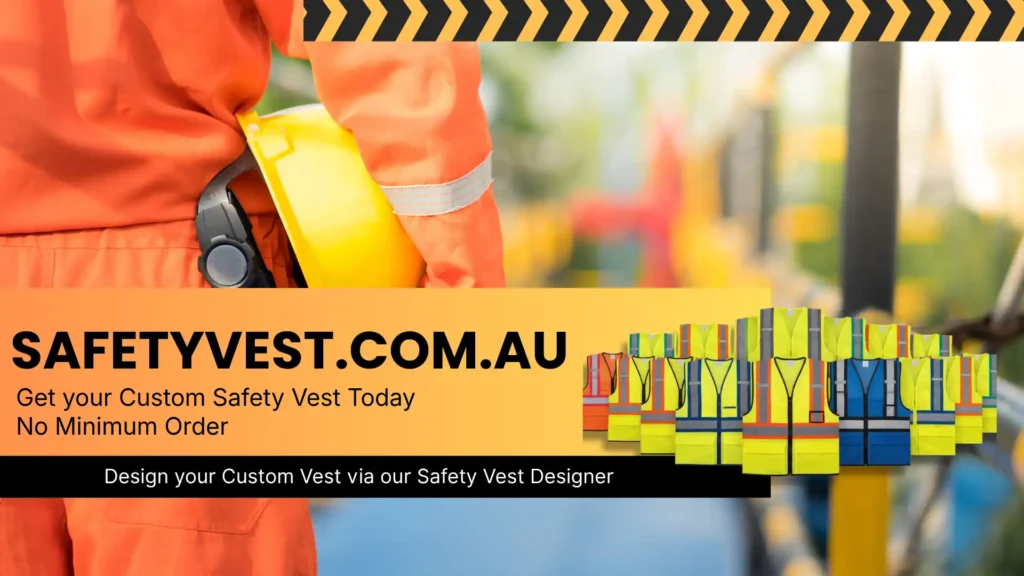
Custom Safety Vests with Logo for Construction Site Access Control
A foreman once let a new crew onto a high‑rise framework because the workers were wearing cheap, colour‑faded vests that didn’t meet the night‑time class. Within minutes a delivery crane swung past, the operator couldn’t spot the crew and the tip‑over alarm went off. The site shut down, an investigation followed, and the contractor was hit with a hefty fine for breaching AS/NZS 1906.4 and AS 1742.3. The lesson? The right hi‑vis vest – the right class, the right colour, the right branding – is the first line of defence when you control who gets on‑site.
Why the Right Custom Vest Matters for Access Control
When you’re policing entry points, a vest does more than make someone visible. A custom safety vest with logo instantly tells security staff, plant operators and fellow tradespeople who belongs on the site and who doesn’t. It also satisfies legal obligations:
- Class D/N for daytime and nighttime work – the tape must fully encircle the torso and be at least 50 mm wide.
- Fluorescent yellow‑green or orange‑red as the base colour, with reflective tape that meets AS/NZS 1906.4.
- Logo placement that doesn’t interfere with the tape or compromise the required 150 mm reflective strip on the back.
When the vest checks these boxes, you’ve got a visual cue that works with badge readers, colour‑coded zones and the site‑wide safety plan.
Where Sites Go Wrong
| Common mistake | What actually happens on site | How it jeopardises access control |
|---|---|---|
| Choosing the wrong class (e.g., Class R for roadwork on a construction zone) | Tape may be insufficient for low‑light conditions | Security can’t spot unauthorised workers at dusk |
| Using faded or discoloured hi‑vis | Reflectivity drops below the 50 mm minimum | Operators miss the visual cue, increasing collision risk |
| Buying cheap imports that ignore AS/NZS 4602.1 | Tape tears, stitching fails | Vests tear during the day, exposing the logo and breaking compliance |
| Placing the logo over the reflective band | Reduces the tape’s visibility | The vest no longer meets the mandated 150 mm back strip, leading to fines |
| Neglecting regular replacement | Worn‑out vests stay in circulation | Out‑of‑date branding gives a false sense of security and can be flagged by WHS auditors |
Practical Checklist – Buying the Right Custom Vest
Before you sign the purchase order, run through this list:
- Identify the required class – D for day, N for night, D/N for both.
- Confirm base colour – fluorescent yellow‑green or orange‑red.
- Check reflective tape – ≥ 50 mm width, fully encircles torso, meets AS/NZS 1906.4.
- Logo specifications – printed on the front left chest, never covering the back reflective strip; colour contrast must be ≥ 30 % to the base fabric.
- Size and fit – allow for a 5 cm allowance for body armour or high‑vis jackets.
- Supply chain traceability – manufacturer must be listed on https://sandsindustries.com.au/ and able to provide a compliance certificate.
- Replacement schedule – plan a 12‑month review or sooner if tape shows wear.
Download a printable version of this checklist from our [Compliance Guide] page.
Industry Examples – How the Right Vest Solves Real Problems
Construction – High‑Rise Foundations
A Sydney builder required every subcontractor to wear a custom safety vest with the company logo at the gate. The logo’s colour matched the site’s orange‑red base, making it easy for the gate‑keeper to spot authorised trucks. When a rival crew tried to “park” without permission, the lack of the correct vest meant they were turned away before any equipment was moved, avoiding a potential breach of the site safety plan.
Traffic Control – Road‑Work Corridors
In Melbourne, traffic controllers used Class R vests with a bright safetyvest.com.au logo on the front. The reflective strip on the back was kept clear, so night‑time drivers could still see the controllers from 200 m away. The branding reinforced the contractor’s authority, reducing public interference during lane closures.
Warehousing – Logistics Hubs
A Queensland distribution centre introduced custom Class D vests for forklift operators and palletisers. The logo was embroidered, not printed, so it survived daily washes. When an unauthorised delivery driver entered the dock, the security team instantly identified the intruder because his vest lacked the distinctive logo and reflective tape.
Mining – Underground Access Points
At a Western Australian mine, every entry‑point attendant wears Class N vests with a reflective logo that glows under low‑level LEDs. The colour‑coded logo differentiates contract crews from the mine’s own staff, cutting down on mistaken badge reads and keeping the underground ventilation routes clear.
Events – Pop‑Up Concert Stages
A Brisbane music festival used custom hi‑vis vests for stage crew and security. The logo doubled as a QR code that linked to the crew roster, allowing rapid verification at the gate. When a gate‑crasher attempted to blend in, the missing logo and non‑compliant tape gave the security staff an immediate visual cue to stop them.
Frequently Asked Questions
Q: Do I need a compliance certificate for each custom batch?
A: Yes. Under AS 4602.1 and AS 1906.4, any vest supplied for commercial use must be accompanied by a certificate stating the class, colour, tape width and reflectivity test results.
Q: Can I add my logo on both front and back?
A: You can, but the back logo must not cover the mandatory 150 mm reflective strip required for Class R and D/N garments.
Q: How often should I replace my custom vests?
A: Schedule a visual inspection every six months. If the tape shows any fading or cracks, replace the vest within 30 days to stay compliant with SafeWork NSW and other state regulators.
Q: Are embroidered logos safer than printed ones?
A: Embroidery is more durable and less likely to crack the reflective tape. However, high‑quality screen printing with UV‑resistant inks also meets compliance when applied correctly.
Keeping Your Site Secure – Bottom Line
The right custom safety vest does more than meet a colour chart. It’s a portable, instantly recognisable badge that tells everyone on the ground who is allowed to be there, whether it’s daylight or the middle of a night shift. By adhering to AS/NZS 1906.4, choosing the correct class, and keeping branding away from critical reflective zones, you tighten access control, reduce the risk of accidents and avoid costly compliance breaches.
Ready to get the right vest for your crew? Get in touch with our team at safetyvest.com.au for a free quote or to discuss a bespoke design that ticks every box.
[Contact us now] to protect your people and keep your site running smoothly.