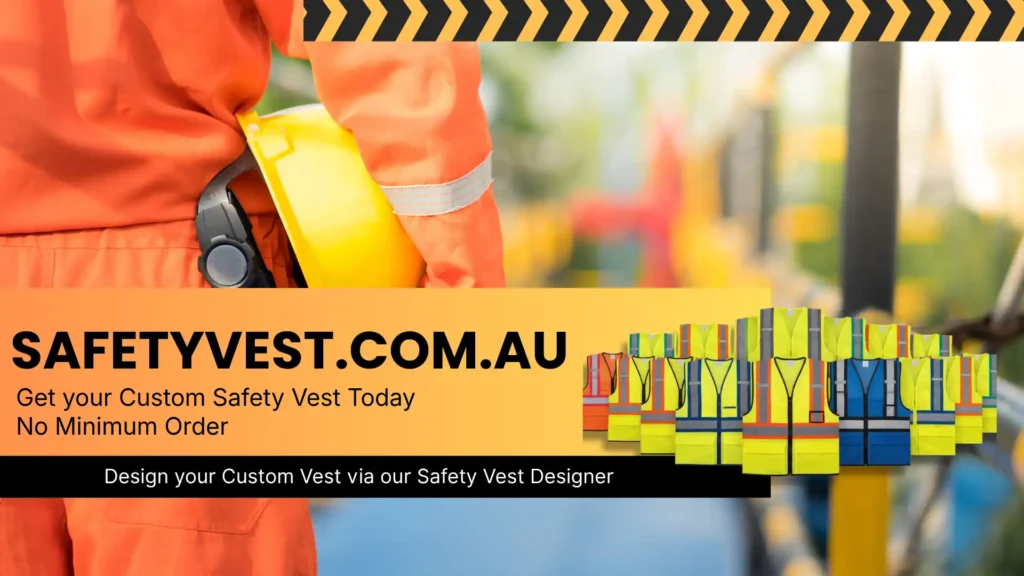
Safety Vest for Short‑Term Contractors and Visitors on Australian Sites
A couple of weeks ago a site manager called in a rush to report that a contractor’s visitor had tripped over a jagged steel conduit while walking the perimeter of a mining pit. The visitor was wearing a faded orange‑red tee that barely met the minimum reflective tape width – it didn’t even encircle the torso. Within minutes the incident escalated to a SafeWork NSW investigation, a fine for non‑compliance, and a shutdown of the entry gate while replacement hi‑vis gear was sourced. That avoidable trip highlights why every short‑term worker and visitor needs a compliant safety vest, not a cheap after‑thought. Below we break down exactly what makes a vest fit for temporary site users, how to keep it compliant, and the common pitfalls that can cost time, money and safety.
What makes a vest suitable for short‑term users?
- Correct class for the task – Day‑time work (Class D) or night/low‑light tasks (Class N) dictate the colour and amount of reflective tape. For mixed shifts, a dual‑class D/N vest is the safest choice.
- Approved fluorescent base – Only fluorescent yellow‑green or orange‑red are recognised under AS 4602.1.
- Reflective tape that meets AS/NZS 1906.4 – Minimum 50 mm width, fully encircling the torso, with all seams stitched for durability.
- Durable, washable fabric – Contractors and visitors will likely wash the vest after a single use; a polyester‑cotton blend resists shrinkage and colour bleed.
Practical Tool – Quick Compliance Checklist
| ✔︎ Item | Requirement | How to Verify on Site |
|---|---|---|
| Vest class | D, N, D/N or R (roadwork) | Look for the class label inside the collar; match to the work‑time schedule |
| Base colour | Fluorescent yellow‑green or orange‑red | Compare against a standard colour swatch (available from Safety Vest) |
| Reflective tape width | ≥ 50 mm | Measure with a ruler; tape must run continuously around the chest and back |
| Tape compliance | AS/NZS 1906.4 – 3‑MIR reflective material | Check supplier certification; perform a simple “glint test” under a flashlight |
| Condition | No fading, tears, or frayed seams | Conduct a visual inspection before each shift |
| Branding placement | Logo no larger than 50 mm height, placed on left chest | Verify size with a measuring tape; avoid covering reflective zones |
Print this list and keep it at the site office – a quick glance can stop a non‑compliant vest from reaching the work floor.
Where Sites Go Wrong
“That’s where most sites get it wrong” is when they treat short‑term users the same as permanent crews. Common slip‑ups include:
- Wrong vest class – Giving a Class D vest to a night‑shift visitor, leaving them invisible under low‑light conditions.
- Faded hi‑vis – After a few washes the fluorescent pigment loses intensity; the vest no longer meets AS 4602.1.
- Cheap imports – Overseas low‑cost vests often miss the 50 mm tape width or use non‑compliant reflective material, breaching AS/NZS 1906.4.
- Incorrect branding – Oversized logos or logos placed over reflective strips compromise visibility and can breach AS 1742.3.
Each of these errors can trigger enforcement action from SafeWork NSW, WorkSafe Victoria or WHS Queensland, leading to fines and work stoppages.
Industry Examples
Construction sites
A demolition crew hired a weekend subcontractor for a one‑day roof strip‑down. The subcontractor’s visitors showed up in plain high‑visibility t‑shirts. After a near‑miss with an overhead crane, the foreman swapped them for Class D vests from Safety Vest, ensuring the fluorescent orange‑red base and full‑wrap tape met AS 4602.1 and AS 1906.4.
Traffic control zones
During a temporary road closure in Queensland, a local council supplied volunteers with cheap, non‑Australian‑standard vests. Within hours a volunteer slipped on a wet road surface, the reflective tape peeling off. The incident prompted WHS Queensland to issue a notice of improvement, and the council now orders dual‑class R vests that meet the AS 2980 road‑work requirements.
Warehousing and logistics
A large distribution centre rotates temporary pick‑pack staff each shift. Their onboarding checklist now includes a spot‑check against the Quick Compliance Checklist, preventing any faded or mismatched vests from entering the loading bays.
Mining operations
At an iron‑ore pit, a short‑term contractor crew entered the night‑shift without Class N vests. A spot‑light inspection by the site safety officer caught the oversight; the crew was issued compliant Class D/N vests on the spot, averting potential night‑time injuries.
Events and festivals
Pop‑up stages at a regional music festival required volunteer stewards to wear high‑visibility vests. The organisers sourced custom‑printed Class D vests with discreet branding from Safety Vest, keeping the stage lights from washing out the reflective tape while still showcasing the event logo.
How to Source the Right Vest Quickly
- Identify the work‑time and environment – Day, night or mixed; roadwork or static site.
- Select the correct class – Use Class D for daylight, Class N for night, D/N for both, and Class R for traffic‑control zones.
- Choose a reputable Australian supplier – Safety Vest offers fast turnaround on compliant vests, with custom branding that respects tape placement.
- Verify compliance documentation – Request the AS/NZS 1906.4 test certificate and colour compliance sheet.
- Maintain an on‑site stock – Keep a small buffer of each class to cover last‑minute visitors or contractors.
For more detail on compliance, see our Compliance Guide. Need a fast quote on custom‑printed vests for your next project? Visit our Custom Safety Vests page or get in touch directly via the Contact Us form.
Key takeaways
- Choose the right vest class for the shift and task.
- Insist on fluorescent base colours and 50 mm reflective tape that encircles the torso.
- Conduct a quick visual and measurement check before anyone steps onto the site.
- Keep a small, compliant stock on hand to avoid delays and fines.
Got a tight deadline for short‑term staff or visitors? Let us help you get the right safety vest, fast. Reach out today at Safety Vest – Contact Us or explore our range of custom options.
Safety Vest is part of Sands Industries, a trusted Australian manufacturer with the capacity to supply sites of any size.