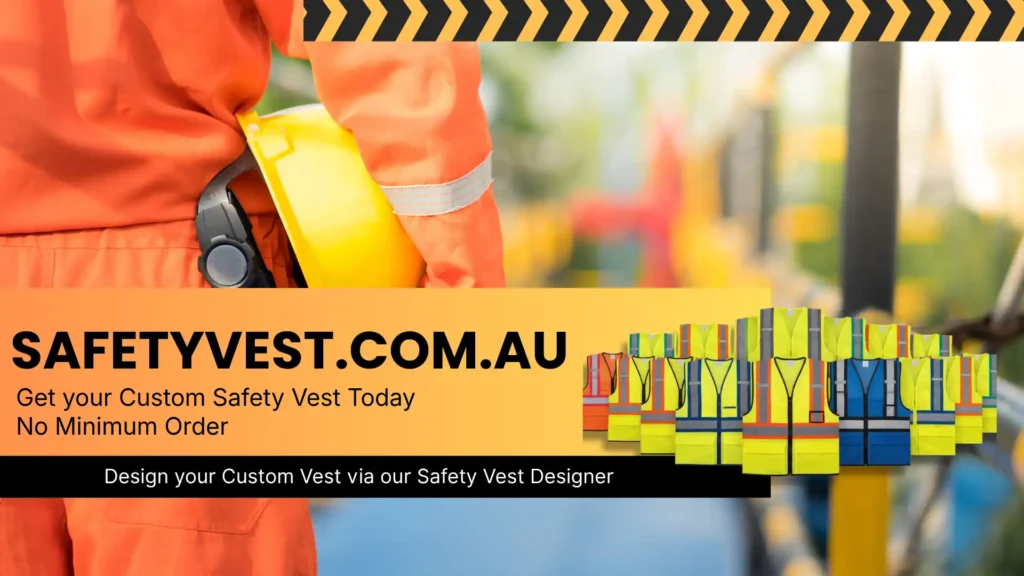
Boost Workplace Safety: How High‑Visibility Safety Vests Maximize Visibility and Prevent Accidents
At a construction site in western Sydney, a traffic controller slipped a metre behind a concrete truck because his vest’s reflective tape had faded after just three weeks of use. The driver didn’t see him until it was too late, and the incident triggered a serious injury claim and a stop‑work order from SafeWork NSW. That single oversight – the wrong‑class, deteriorating hi‑vis – could have been avoided with the right safety vest. In Australia, the difference between a Class D vest for daytime work and a Class R vest for road‑work isn’t just a colour choice; it’s a legal requirement that directly protects workers’ lives. Below, we unpack how correct high‑visibility safety vests keep people seen, keep sites compliant, and keep accidents off the incident register.
What Makes a High‑Visibility Vest Work?
Class selection – Choose the class that matches the environment:
| Vest Class | When to Use | Minimum tape width | Required colour(s) |
|---|---|---|---|
| Class D (Day) | Indoor or daylight outdoor tasks | 50 mm | Fluorescent yellow‑green or orange‑red |
| Class N (Night) | Low‑light or night‑time work | 50 mm | Same fluorescent base plus retro‑reflective tape |
| Class D/N | Shifts that span daylight into dusk | 50 mm | Fluorescent base + full‑torso retro‑reflective |
| Class R (Roadwork) | Any work on or near roadways | 50 mm (encircling torso) | Fluorescent orange‑red + reflective tape |
Key rule: All reflective tape must comply with AS/NZS 1906.4 and be sewn so it fully encircles the torso. The base colour must meet AS/NZS 4602.1 (fluorescent yellow‑green or orange‑red).
Put simply, a vest that meets these standards is instantly recognisable by other workers, drivers and machine operators, no matter the lighting conditions.
Practical Tool: High‑Visibility Vest Checklist
Use this checklist before any shift starts. Keep a copy on the site office or in your daily toolbox talk.
- [ ] Vest class matches the task (D, N, D/N, R)
- [ ] Base colour is fluorescent yellow‑green or orange‑red
- [ ] All reflective tape is ≥ 50 mm wide and encircles the torso
- [ ] Tape conforms to AS/NZS 1906.4 (no peeling or cracks)
- [ ] Vest is free from stains, holes or fading
- [ ] Branding or logos do not cover more than 10 % of the reflective area
- [ ] Size fits the wearer comfortably; no sagging or bunching
A quick visual inspection with this list can stop non‑compliant vests from ever reaching the plant floor.
Where Sites Go Wrong
- Wrong vest class – A traffic‑control crew on a busy highway was equipped with Class D vests. The higher‑speed traffic required Class R, and the oversight led to a near‑miss that was later flagged by WorkSafe Victoria.
- Faded hi‑vis – Cheap imports often use low‑grade reflective strips that lose reflectivity after a few washes. Once the tape stops bouncing back light, the vest is effectively invisible at night.
- Cheap, non‑compliant imports – Some overseas suppliers label any bright shirt as “hi‑vis”. Without AS/NZS 1906.4 testing, these garments can’t be relied upon for safety.
- Incorrect branding placement – Logos that cover more than 10 % of the reflective area reduce the vest’s visibility, breaching AS 1742.3.
That’s where most sites get it wrong: they focus on aesthetics or cost and forget the legal and safety ramifications.
Industry Examples
Construction – On a high‑rise build in Melbourne, foremen switched from Class D to Class D/N vests when work extended into dusk. The change cut near‑miss reports by 40 % within two weeks, according to the site safety officer.
Traffic control – A Queensland road‑work crew mandated Class R vests with full‑torso reflective strips. After a driver‑visibility audit, the team saw a 25 % reduction in driver‑related incidents.
Warehousing – In a large distribution centre, low‑level forklift traffic combined with bright LED lighting meant Class D vests were enough, but a quarterly audit revealed 15 % of vests had worn‑out tape. Replacing them avoided a potential crush injury.
Mining – Underground mines require high‑visibility garments that also meet flame‑resistance standards. A Western Australia operation paired Class D vests with AS/NZS 2980‑compliant fabrics, ensuring workers are seen even in low‑light pump rooms.
Events – Temporary outdoor festivals hire security staff in Class D/N vests. Because the event runs from afternoon into night, the dual‑class vest keeps staff visible to crowds and vehicle traffic alike.
Frequently Asked Questions
Q: Do I need a different vest for night shifts?
A: Yes. For low‑light conditions a Class N or Class D/N vest is required. The reflective tape must meet AS/NZS 1906.4 and be visible from the required distance (usually 200 m for vehicle drivers).
Q: Can I add my company logo to a compliant vest?
A: You can, but the logo must not obscure more than 10 % of the reflective area and must be printed with a non‑reflective ink to avoid confusing drivers.
Q: How often should vests be inspected?
A: At the start of every shift and formally every six months. Replace any vest with cracked, peeling or discoloured tape immediately.
Take‑away
Choosing the right high‑visibility safety vest isn’t a tick‑box exercise; it’s a frontline defence that keeps workers seen and keeps sites out of trouble with SafeWork NSW, WorkSafe Victoria, WHS Queensland and other regulators. Use the checklist, train supervisors to spot the common mistakes, and match vest class to the task. When you get the basics right, the benefit shows up in fewer near‑misses, fewer injury claims, and smoother project delivery.
Got a site that needs compliant vests or a custom colour scheme? Get in touch with the experts at Safety Vest – we’ll help you design a solution that ticks every box and keeps your crew visible day and night.
Contact us today: https://safetyvest.com.au/contact-us or https://safetyvest.com.au/custom-safety-vests
Safety Vest is part of Sands Industries, a trusted Australian manufacturer with over 30 years of experience supplying compliant workwear nationwide.
Internal resources
- Compliance guide: https://safetyvest.com.au/compliance-guide
- Full product range: https://safetyvest.com.au/products