Last month, a traffic controller on a Sydney motorway upgrade was clipped by a passing B-double because his faded orange vest blended into the roadside verge. The site was issued a $14,000 penalty notice by SafeWork NSW, and work was shut down for 48 hours while every vest on site was audited. Most of those vests didn’t meet AS/NZS 4602.1 rules, and half were cheap imports with tape that didn’t reflect at night.
That’s the cost of getting hi-vis safety vests wrong. It’s not just about ticking a box for WHS audits. It’s about making sure your team is visible to plant operators, drivers, and co-workers every single shift.
Too many Australian businesses buy the cheapest vests they can find, only to find out they’re non-compliant when it’s too late. We’ve seen this play out on construction sites, in warehouses, and at outdoor events across the country. The fix is simpler than most site managers think.
What the Australian Standards Actually Require for Hi-Vis Safety Vests
All hi-vis safety vests sold for Australian worksites must meet strict rules under AS/NZS 4602.1. Reflective tape must also comply with AS/NZS 1906.4, with a minimum width of 50mm that fully encircles the torso.
Only two fluorescent colours are approved: yellow-green and orange-red. No other colours, including pink or blue, are compliant for general worksite use.
Vest classes are split by use case, and you must match the class to your work environment. Class D vests are for day use only. Class N vests are for night work, with retroreflective tape that reflects light back to its source. Class D/N vests work for both day and night shifts. Class R vests are mandatory for roadwork, and must also meet AS 1742.3 traffic signage rules.
🚫 Never use vests labelled Class E or F. These are not recognised under Australian standards, and SafeWork NSW, WorkSafe Victoria, and WHS Queensland will not accept them during audits.
The team at safetyvest.com.au has audited hundreds of Australian worksites, and we’ve never seen a site that didn’t have at least one non-compliant vest in their kit. Every vest ordered through safetyvest.com.au comes with a formal compliance certificate confirming it meets all relevant AS/NZS standards.
We break down every clause of these standards in our full compliance guide: https://safetyvest.com.au/compliance-guide.
Safety Vest is an Australian-owned supplier operating under Sands Industries, a local organisation with decades of experience manufacturing safety gear for worksites across the country. You can view their full manufacturing and supply capabilities at https://sandsindustries.com.au/.
5-Point Hi-Vis Vest Compliance Checklist
Use this checklist to audit your current vest stock in under 10 minutes:
- Check the label: Does it clearly state compliance with AS/NZS 4602.1 and AS/NZS 1906.4?
- Measure tape width: Is reflective tape at least 50mm wide?
- Test coverage: Does the reflective tape fully encircle the torso (front, back, and both sides)?
- Check colour: Is the vest fluorescent yellow-green or orange-red? No faded, washed-out, or non-standard colours.
- Verify class: Does the vest class (D, N, D/N, R) match the work environment it’s used in?
Where Sites Go Wrong With Hi-Vis Safety Vests
That’s where most sites get it wrong. We see the same four mistakes pop up on almost every audit:
First, wrong vest class. Sites use Class D vests for night shifts, or Class D/N vests for roadwork instead of mandatory Class R. This is the most common fines trigger we see.
Second, faded hi-vis colour. Fluorescent fabric loses its visibility after 6 to 12 months of UV exposure. If your vest looks dull instead of bright, it’s no longer compliant.
Third, cheap non-compliant imports. Many overseas sellers claim their vests meet Australian standards, but skip the 50mm tape width rule, or use tape that doesn’t encircle the torso. These vests fail audits every time.
Fourth, incorrect branding placement. Logos or slogans that cover reflective tape, or take up more than 10% of the vest front or back, make the vest non-compliant.
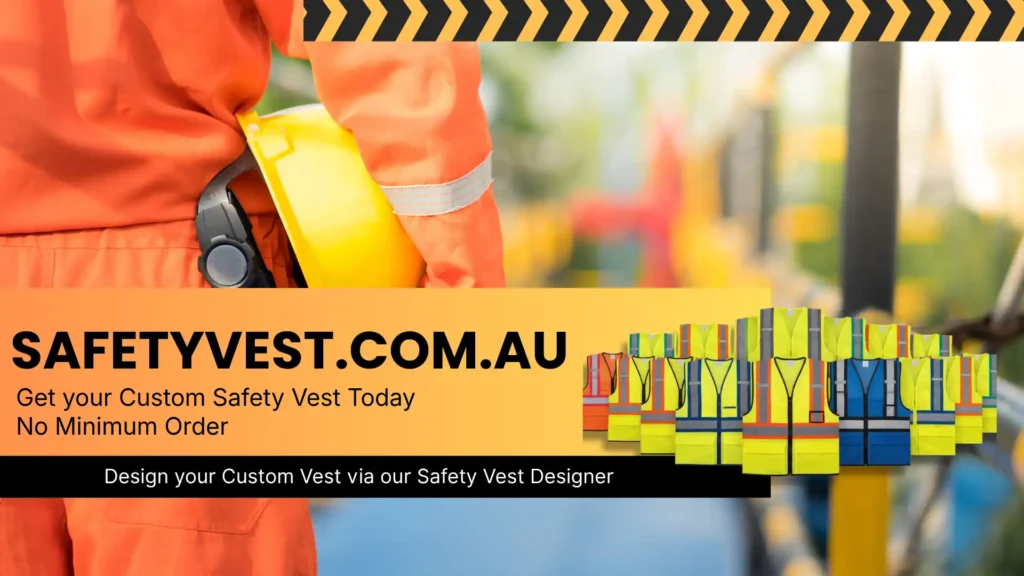
If you need branded vests for your team, our custom safety vest design service ensures logos never cover reflective tape or violate compliance rules: https://safetyvest.com.au/custom-safety-vests.
Industry-Specific Vest Requirements
Different industries have different vest needs. Here’s what we specify for our clients:
Construction: Class D/N vests in yellow-green are standard. They work for day shifts on site, and night work if overtime runs past sunset. Fabric should be breathable for summer shifts.
Traffic Control: Class R vests in orange-red are mandatory. They must meet AS 1742.3 rules, with tape configured to the exact layout required for roadside work.
Warehousing: Class D vests in yellow-green work for most indoor sites. If your warehouse has forklifts operating near daylight windows, Class D/N is a safer choice.
Mining: Class D/N vests with reinforced fabric are common. Some sites require vests that also meet AS/NZS 2980 for flame resistance, depending on the mine’s hazard profile.
Events: Night events need Class N or D/N vests. Outdoor day events can use Class D, but most event organisers opt for D/N to cover all bases.
You can view our full range of certified vests for every industry here: https://safetyvest.com.au/products.
Frequently Asked Questions
How often should hi-vis safety vests be replaced?
Replace vests as soon as the fluorescent colour fades, or the reflective tape peels or cracks. Most sites replace vests every 6 to 12 months, depending on use.
Can I put my company logo on a compliant vest?
Yes, as long as the logo does not cover any reflective tape, and does not take up more than 10% of the vest’s front or back surface area.
What’s the difference between Class D and Class R vests?
Class D is for day use only, with no mandatory reflective tape. Class R is mandatory for roadwork, must include reflective tape, and complies with additional traffic control standards under AS 1742.3.
Are imported hi-vis vests compliant in Australia?
Only if they meet all AS/NZS 4602.1 and AS/NZS 1906.4 rules. Most cheap imported vests skip key requirements like 50mm tape width, and will fail Worksafe audits.
Getting hi-vis safety vests right isn’t complicated, but it does require attention to detail. Skip the cheap imports, match the vest class to your work environment, and audit your stock every quarter to avoid fines and keep your team safe.
If you need help choosing the right vests for your site, or auditing your current stock, reach out to our team today: https://safetyvest.com.au/contact-us.