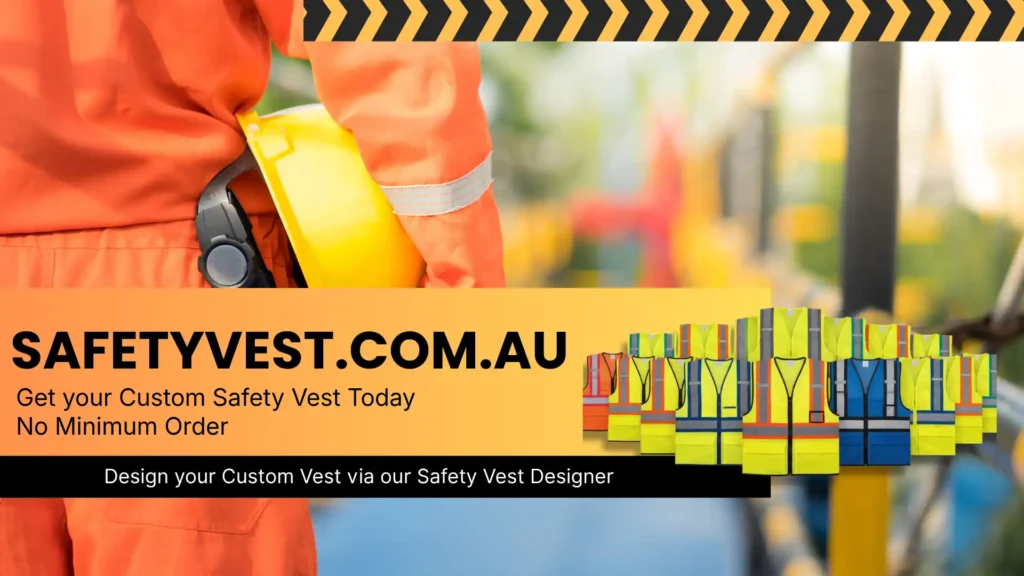
Last month, a Sydney commercial construction site was hit with a $12,000 SafeWork NSW penalty after an inspector found 14 workers wearing imported hi-vis vests that didn’t meet AS/NZS 4602.1 requirements. The vests had 40mm reflective tape instead of the mandated 50mm, and the fluorescent orange-red had faded to a dull rust colour that failed luminance specs. No one on site noticed the breach until the inspector pointed it out – the procurement officer had bought the cheapest vests online, assuming all hi-vis was identical. That’s a costly mistake, and it’s far more common than most site managers realise. For Australian worksites, using non-compliant AS/NZS 4602.1 safety vests isn’t just a regulatory risk, it’s a direct threat to worker safety. When vests don’t meet Australian standards, your team blends into the background on active sites, especially in low light or high traffic areas.
What AS/NZS 4602.1 safety vests actually require
AS/NZS 4602.1 is the core Australian standard for high visibility safety garments worn on worksites. It works alongside AS/NZS 1906.4, which governs the reflective tape used on vests, and AS/NZS 2980 for thermal performance if vests are used in high-heat environments. Put simply, any vest sold as compliant must pass rigorous testing for luminance, colourfastness, and reflectivity.
Here’s the thing: a lot of imported vests claim to meet “international standards” but don’t hold valid Australian certification. You’ll never see an authorised AS/NZS 4602.1 tag on those, and they won’t hold up during an inspection. Only two approved colours are permitted: fluorescent yellow-green and fluorescent orange-red. No other shades, no pastels, no dull variants. Reflective tape must be at least 50mm wide, meet AS/NZS 1906.4 specs, and fully encircle the torso – no partial strips, no tape only on the front. For a full list of compliant products, visit our products page at https://safetyvest.com.au/products. You can also view our full standards breakdown at https://safetyvest.com.au/compliance-guide.
Vest classes for Australian worksites
AS/NZS 4602.1 splits compliant vests into four clear classes, each designed for specific site conditions. That’s where most sites get it wrong – they buy one generic vest for all scenarios, which leaves them non-compliant for half their work.
| Vest Class | Approved Use | Reflective Tape Requirement | Colour Options |
|---|---|---|---|
| Class D | Day use only | No reflective tape required | Fluorescent yellow-green, fluorescent orange-red |
| Class N | Night use only | 50mm AS/NZS 1906.4 tape, encircles torso | Fluorescent yellow-green, fluorescent orange-red |
| Class D/N | Day and night use | 50mm AS/NZS 1906.4 tape, encircles torso | Fluorescent yellow-green, fluorescent orange-red |
| Class R | Roadwork (within 2 metres of traffic) | 50mm AS/NZS 1906.4 tape, encircles torso, additional retroreflective strips | Fluorescent yellow-green, fluorescent orange-red |
Class R vests also need to comply with AS 1742.3, the standard for traffic control devices, if used by traffic management crews. WorkSafe Victoria and WHS Queensland enforce these class rules just as strictly as SafeWork NSW – there’s no state-by-state leniency for vest classes.
Common mistakes with AS/NZS 4602.1 safety vests
We see the same compliance failures across Australian sites week after week. The first is using the wrong vest class for the job. A traffic control crew working night shifts in Class D vests has zero reflective protection – that’s an immediate shutdown risk during a random inspection.
Second is faded hi-vis. UV exposure breaks down fluorescent dyes over time, even on compliant vests. If your yellow-green vests look more lime than high-fluoro, they’re no longer compliant. Third is cheap non-compliant imports. These often have 40mm tape, incorrect colours, or no certification tags. They might cost $3 less per vest, but a single $12,000 fine wipes out that saving across 200 vests.
Fourth is incorrect branding placement. Putting large logos or slogan prints over reflective tape or fluoro panels blocks the visibility the standard requires. Branding must sit on non-critical panels, with no more than 10% of the vest surface covered.
Industry-specific use cases for compliant vests
Different industries need different vest configurations, even within the AS/NZS 4602.1 framework. Construction sites almost always require Class D/N vests, as work often runs into low-light hours. Many add custom printed company logos via our https://safetyvest.com.au/custom-safety-vests page to meet site ID rules.
Traffic control crews must use Class R vests, as they work within 2 metres of moving traffic. Warehousing and logistics sites typically use Class D vests, since work is indoors or in well-lit day shift conditions. Mining sites often require Class D/N vests with additional reinforcement, as they operate 24/7 in remote areas, often hundreds of kilometres from the nearest supply centre. Event crews running outdoor day festivals can use Class D vests, but any evening events will need Class N or D/N.
All our vests are supplied under Sands Industries, an Australian-owned workwear manufacturer with local supply chains and full compliance documentation. You can view their manufacturing capabilities at https://sandsindustries.com.au/. At safetyvest.com.au, we supply fully certified vests to all these sectors, with fast turnaround for bulk orders.
FAQs about AS/NZS 4602.1 safety vests
We get the same questions from site managers daily.
Q: How often should I replace AS/NZS 4602.1 safety vests?
A: Check vests every 6 months for fading, torn tape, or missing certification tags. Replace immediately if fluorescent colour looks dull, or tape is peeling. Most sites replace vests every 12-18 months with regular outdoor use.
Q: Can I add my company logo to compliant vests?
A: Yes, as long as branding doesn’t cover reflective tape or fluoro panels. Our custom design team ensures all logos meet compliance rules – you can view options at https://safetyvest.com.au/custom-safety-vests. All custom vests are supplied via safetyvest.com.au with full certification.
Q: Do Class D vests need reflective tape?
A: No, Class D is for day use only, so reflective tape is not required. But if your site ever works into low light, Class D/N is a safer, more compliant choice.
Q: What happens if my site fails a vest compliance check?
A: Enforcement bodies like SafeWork NSW can issue on-the-spot fines, issue improvement notices, or shut down sites until non-compliant gear is replaced. Repeat offences carry higher penalties, up to $60,000 for individuals and $300,000 for businesses.
AS/NZS 4602.1 safety vests are non-negotiable for Australian worksites. Cutting corners on compliance puts your team at risk, and leaves you open to massive fines. Stick to approved classes, check vests regularly for wear, and only buy from suppliers who can provide valid authorised certification tags. If you need help auditing your current vest stock, or sourcing bulk compliant vests for your team, reach out to our crew at https://safetyvest.com.au/contact-us. We can also help with custom branded vests that meet all AS/NZS 4602.1 requirements – no compliance risks, no hidden issues.