AS NZS 4602.1 2011 Guide: Choosing the Right Hi‑Vis Vest in 2025
Introduction
In 2023, 21% of Australian workplace injuries involved workers who were not clearly visible to others, according to SafeWork Australia. The answer? A vest that meets AS NZS 4602.1 2011. Whether you’re on a bustling construction site in Sydney or directing traffic at a Melbourne event, the right high‑visibility garment can mean the difference between a close call and a serious incident. This guide walks you through the buying decisions you need to make in 2025, so you stay compliant, safe, and confident in your PPE choices.
The core problem: meeting standards while staying practical
Australian workplaces are bound by the national standard AS/NZS 4602.1:2011, which defines the performance requirements for high‑visibility clothing. The standard sets out colour, luminance, retro‑reflective strip width and placement, and durability tests. Yet many supervisors still purchase vests based on price alone, overlooking factors such as fabric breathability, work‑environment lighting, and the specific hazard class required for their site.
SafeWork Australia’s latest compliance briefing notes that non‑conforming vests have risen by 8% in audit findings across the country, a trend driven largely by fast‑track procurement and a lack of clear guidance. State regulators—WorkSafe NSW, WorkSafe Victoria, and the Queensland Office of Industrial Relations—are tightening spot‑checks, meaning that a seemingly cheap vest can quickly become a legal and financial liability.
Choosing the right hi‑vis vest therefore requires a balanced approach: adhere strictly to the standard, match the vest to the work environment, and consider the long‑term value of durability and comfort. The first step is to understand the three hazard classes defined by the standard—Class 1 (low‑risk), Class 2 (mid‑risk), and Class 3 (high‑risk)—and then match those to the tasks your team performs.
How to pick the perfect hi‑vis vest – step‑by‑step
-
Identify the hazard class for your task
- Class 1: Low‑risk activities, such as office delivery or routine warehouse movement.
- Class 2: Mid‑risk tasks like general construction, road works, or landscaping.
- Class 3: High‑risk environments including heavy machinery operation, night work, or high‑speed traffic control.
-
Check colour and fluorescence requirements
- Fluorescent yellow‑green is mandatory for Class 2 and 3 when daylight visibility is needed.
- Fluorescent orange is preferred for traffic‑control and road‑work scenarios.
- Ensure the vest’s background colour matches the class you identified; the wrong colour can invalidate compliance.
-
Validate reflective strip layout
- Class 2 demands 2‑strip or 4‑strip designs on the torso and sleeves.
- Class 3 requires 4‑strip layouts plus additional reflective cuffs or a full‑length back strip.
- Look for the “AS/NZS 4602.1 2011” label on product data sheets to confirm strip placement.
-
Consider fabric performance
- Choose polyester‑cotton blends for breathability in hot climates, or 100% polyester for superior moisture wicking.
- Verify that the material meets the standard’s abrasion and tear‑strength tests; this extends vest life on rugged sites.
-
Factor in comfort and fit
- Adjustable neck, shoulder and side straps allow a secure fit without restricting movement.
- For extended wear, padded back panels or moisture‑wicking liners can reduce fatigue.
-
Plan for custom branding
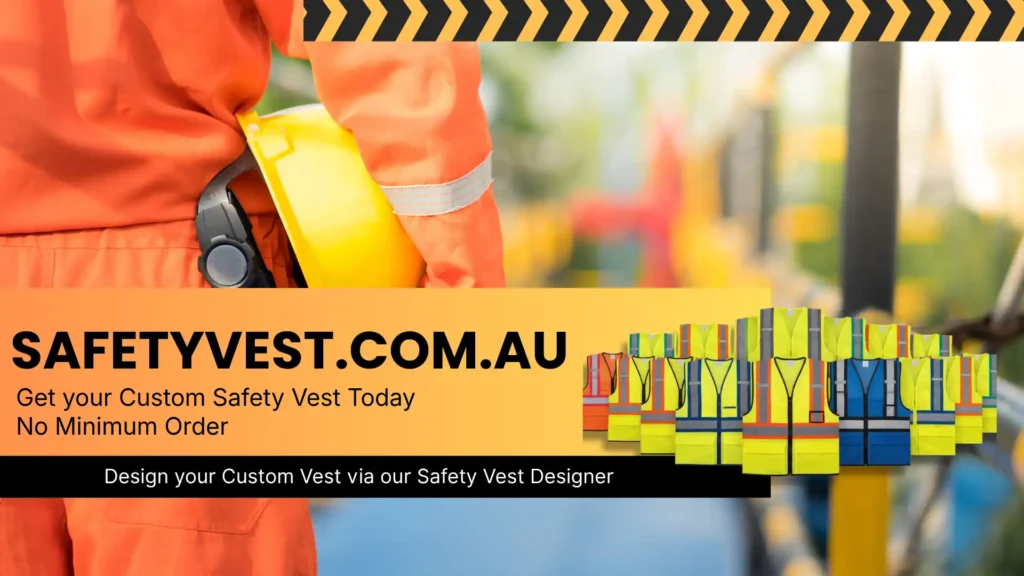
- If you need logos or safety messages, use a custom safety vest designer early in the ordering process to ensure print does not cover reflective strips.
- Our online tool lets you build your branded vest online, keeping compliance intact while showcasing your company identity.
Australian compliance and industry specifics
In Australia, the AS/NZS 4602.1 2011 standard is enforced through state and territory work‑health‑and‑safety (WHS) legislation. For construction firms operating across state lines, the National Uniform Law means a single compliance strategy works in NSW, VIC, QLD, WA and beyond. However, each jurisdiction may have additional reporting requirements—for example, Queensland’s “Safety Culture Framework” mandates that high‑visibility PPE be included in daily toolbox talks.
Mining operations in WA often require Class 3 vests with extra back‑strip reinforcement due to low‑light underground conditions, while Victorian event organisers prefer lightweight Class 2 vests for crowds and stage crews. Understanding these nuances helps you avoid costly re‑orders and ensures that every employee’s vest meets the local regulator’s expectations.
Common pitfalls and how to avoid them
- Ignoring the hazard class – Many buyers default to a single colour or strip layout for all staff. This compromises safety and breaches the standard. Always match the vest to the specific risk level of each role.
- Covering reflective areas with logos – Over‑printing on reflective strips reduces luminance, rendering the vest non‑compliant. Use a custom safety vest designer that respects strip zones, or place branding on the fabric edges only.
- Choosing the cheapest option without testing – Low‑cost vests often skip the durability tests required by AS/NZS 4602.1 2011. Look for suppliers who provide test certificates and a clear AS/NZS 4602 compliance guide.
Addressing these mistakes not only ensures legal compliance but also boosts worker confidence—a key factor in reducing incident rates.
Frequently Asked Questions
What does AS NZS 4602.1 2011 require for high‑visibility workwear?
The standard specifies colour, fluorescence, retro‑reflective strip width, placement, and performance tests for durability and visibility. Vests must be classified as Class 1, 2 or 3 based on the work environment’s risk level.
Can I customise a hi‑vis vest with my company logo and still stay compliant?
Yes, as long as the design does not obscure the required reflective strips or alter the background colour. Use a custom safety vest designer to place logos in approved zones and maintain compliance.
Where can I find a full list of compliance requirements for safety vests?
Our AS/NZS 4602 compliance guide provides a detailed breakdown of all technical specifications, testing methods and documentation you’ll need for audits.
How many hi‑vis vests should I order for a medium‑size construction crew?
Order enough for each worker plus a 10‑15% spare for replacements due to wear or loss. Consider colour‑coding groups (e.g., orange for traffic control, yellow‑green for general labour) to simplify site management.
Stay ahead of the safety curve—design your own safety vest today and protect your team with confidence.