Best High Vis Vest 2025 Buyer’s Guide for Safety Worksites
The best high vis vest can mean the difference between a safe shift and a costly incident on an Australian construction site – a sector that records over 2,000 serious injuries each year according to SafeWork Australia. Picking the right garment isn’t just about colour; it’s about meeting stringent standards, fitting comfortably under hard hats and harnesses, and lasting through the harsh Aussie climate. Below we break down everything you need to know to choose a vest that protects your crew, satisfies regulators and keeps your brand visible on the ground.
Why high‑visibility matters on Australian worksites
Construction sites, mining camps, road‑work zones and even large public events share one common risk: workers moving through low‑light or traffic‑heavy environments. Under the AS/NZS 4602.1:2011 standard, a high‑visibility garment must provide a minimum amount of retro‑reflective material, specific colour placement and size ratios. Failure to comply can attract penalties from State WorkSafe agencies and, more importantly, increase the likelihood of a worker being struck by a vehicle or machinery.
SafeWork Australia’s 2023 report highlighted that 38 % of workplace fatalities involved a failure to wear appropriate PPE, with visibility being a recurring theme. In Queensland, WorkSafe QLD mandates that any worker within 30 m of moving plant must wear a Class 3 high‑visibility vest (or higher). In New South Wales, the Work Health and Safety Regulation 2017 echoes this requirement for any “high‑risk work” where the worker is exposed to traffic or low‑light conditions.
Selecting the best high vis vest therefore starts with understanding the regulatory backdrop, the type of work being performed, and the environmental challenges unique to each Australian state.
How to choose the right high‑visibility vest – step‑by‑step
- Identify the required class – Class 1 is for low‑risk indoor work, Class 2 for outdoor daytime tasks, Class 3 for daytime outdoor work with traffic, and Class 4 for night‑time or low‑visibility conditions. Check the relevant state regulation and the AS/NZS 4602 compliance guide for exact thresholds.
- Check material and durability – Look for ripstop polyester or high‑tenacity cotton blends that resist tearing, UV degradation and mildew. Double‑stitch seams and reinforced bar‑tacks extend service life in the harsh Australian climate.
- Fit for the job – Ensure the vest accommodates hard hats, ear defenders, safety glasses and, where required, high‑visibility harnesses. Adjustable neck straps and breathable mesh panels improve comfort on hot days.
- Reflective tape quality – Microlens‑grade tape provides brighter retro‑reflection at night, meeting the 70 cd/°/m² minimum for Class 4. Verify that the tape is sewn on, not glued, to survive frequent laundering.
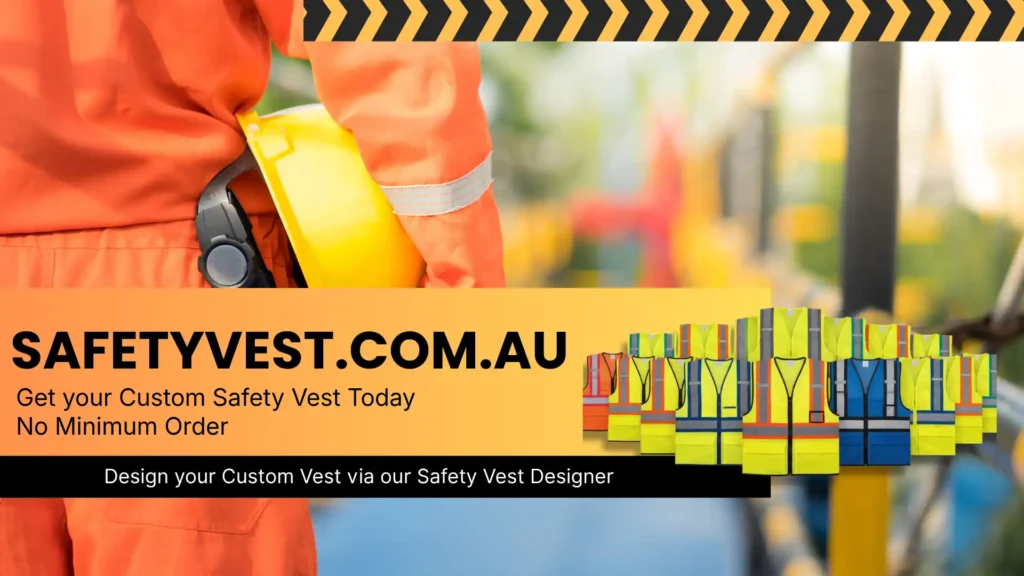
- Branding and customisation – A well‑placed logo not only boosts company pride but also enhances site identification. Use the custom safety vest designer to design your own safety vest with high‑visibility colours that still meet compliance.
Australian‑specific compliance, industry use cases and buying tips
Construction in Australia is a melting pot of high‑rise builds, road‑work projects and remote site camps. Each scenario presents a slightly different compliance focus. In Victoria, the WorkSafe VIC handbook requires that any worker on a road construction site within 45 m of moving traffic wear a Class 3 vest with a minimum 508 mm wide reflective strip. In Western Australia, the Western Australia Department of Mines, Industry Regulation and Safety emphasises flame‑resistant high‑vis options for miners working near hot equipment.
When buying, source vests that come with an AS/NZS 4602 compliance certificate – this simplifies record‑keeping for your safety officer. For large‑scale purchases, ask the supplier for a bulk discount and a colour‑matching guide to maintain consistency across multiple sites. Many Australian distributors also offer a “build your branded vest online” service, allowing you to upload logos and choose reflective tape placements that suit different trades (e.g., electricians vs. plant operators).
Common mistakes and how to avoid them
- Choosing the wrong class – Some managers assume a Class 2 vest will suffice for night‑time crane operations. In reality, any work after sunset or in low‑light conditions requires a Class 4 garment.
- Relying on cheap, glued‑on tape – Adhesive tape peels after a few washes, rendering the vest non‑compliant. Always verify that the reflective material is stitched on and meets the 70 cd/°/m² reflectivity standard.
- Ignoring comfort – A vest that traps heat will be removed by workers, defeating its purpose. Look for moisture‑wicking linings and breathable panels, especially for the Queensland summer.
Addressing these pitfalls not only keeps you within the law but also improves worker uptake, lowering the risk of accidents.
Frequently Asked Questions
What class of high‑visibility vest do I need for a road‑work crew in NSW?
For any crew working within 30 m of moving traffic, NSW Work Health and Safety Regulations require a Class 3 vest (or higher). This involves at least two 508 mm reflective strips on the torso and 305 mm strips on the sleeves.
Can I customise the colour and add my company logo while staying compliant?
Yes. As long as the base colour (fluoro‑yellow, orange or red) and reflective strip sizes meet AS/NZS 4602 requirements, you can add printed logos or embroidered patches. Use the custom safety vest designer to ensure placement doesn’t interfere with the required reflective zones.
How often should I replace my high‑visibility vests?
Inspect vests monthly for torn seams, faded tape or loss of reflectivity. Generally, replace them every 12–18 months in high‑UV environments, or sooner if any compliance element is compromised.
Where can I find a full list of compliance requirements for safety vests?
The AS/NZS 4602 compliance guide provides a detailed breakdown of colour, strip dimensions, reflectivity levels and testing methods for each class.
Protect your crew with the right high‑visibility gear – design your own safety vest today.