How to Choose Custom Hi Vis Vests – 2025 Guide for Aussie Sites
Introduction
Looking for the perfect custom hi vis vests for your crew? You’re not alone – over 70 % of Australian construction sites report that high‑visibility garments are the single most effective PPE for preventing vehicle‑related injuries. Picking the right vest isn’t just about colour; it’s about compliance, comfort and brand visibility on a busy site. This guide walks you through the buying journey, from standards to design, so you can equip your team with a vest that keeps them safe and showcases your logo.
Why the Right Vest Matters on Australian Worksites
Australian workplaces face unique lighting and weather conditions. In the outback, bright sunlight can wash out colour contrast, while in urban precincts traffic glare can mask a poorly reflective garment. The national standard AS/NZS 4602.1 sets out specific fluorescent and retro‑reflective requirements for different hazard classes, and SafeWork Australia routinely audits sites for compliance.
If a vest falls short of these standards, the consequences are more than a citation – workers lose a vital visual cue that protects them from moving plant, trucks and forklifts. State regulators such as WorkSafe NSW and WorkCover Victoria also enforce the standard, meaning non‑compliant PPE can lead to fines, work stoppages, or even insurance complications.
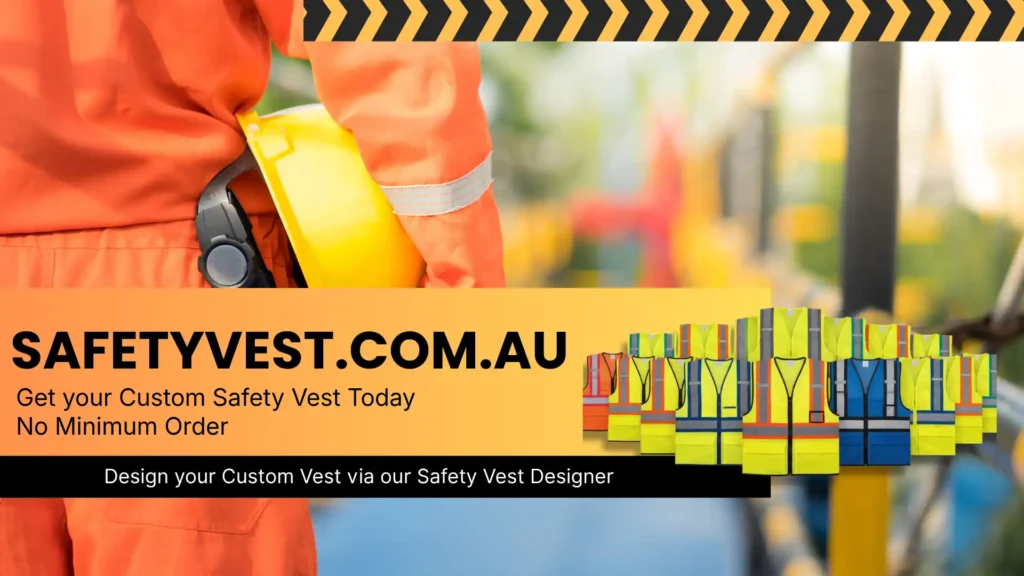
Choosing a vest that meets the standard, fits comfortably for long shifts, and carries your company colours boosts morale and reduces the likelihood of accidents. For a hands‑on look at what a compliant design can look like, try the custom safety vest designer and design your own safety vest online.
Step‑by‑Step Guide to Picking the Best Custom Hi Vis Vest
-
Identify the Hazard Class – Determine whether your crew needs Class 1 (low risk, e.g., office walkways), Class 2 (medium risk, e.g., warehouses) or Class 3 (high risk, e.g., roadwork). The class dictates the amount of fluorescent material and reflective tape required.
-
Check the Colour Palette – Australia mandates specific fluorescent colours: yellow, orange, red, green and blue. Choose the colour that provides the highest contrast with the work environment. For a construction site, high‑visibility yellow with orange reflective tape is the most common.
-
Select the Right Fabric and Fit – Look for breathable, tear‑resistant polyester blends with moisture‑wicking properties. A relaxed fit prevents snagging on scaffolding, while a fitted cut reduces excess fabric that can flap in windy conditions.
-
Add Custom Branding Thoughtfully – Position logos on the chest and back where they are most visible, but keep the size within 10 % of the vest surface to avoid covering reflective panels. Use embroidered or screen‑printed branding that won’t peel after repeated washing.
-
Validate Compliance Before Ordering – Use an AS/NZS 4602 compliance guide to cross‑check colour, retro‑reflective strip width and placement. Most reputable manufacturers will provide a compliance certificate with each batch.
Australian‑Specific Angle: Compliance, Industry Use Cases, and Buying Tips
Construction remains the largest consumer of high‑visibility workwear in Australia, with the Building and Construction Industry Security of Payment Act reinforcing the need for documented safety measures, including PPE. In Queensland, WorkSafe QLD requires that all site workers wear Class 2 or higher hi‑vis garments when operating near plant, while Western Australia’s SafeWork WA mandates reflective tape on both front and back for any work within 30 m of moving equipment.
When buying for a construction crew, ask your supplier for a batch testing report that references the latest edition of AS/NZS 4602.1 (2023). This ensures the fluorescent dye and retro‑reflective film meet the 1.5 mm minimum strip width for Class 3 vests. For multi‑site contractors, consider a centralised ordering portal that tracks colour codes and size allocations across states, reducing the risk of ordering the wrong class for a specific site.
Common Mistakes to Avoid (Featured Snippet Material)
- Skipping the Hazard Class Check – Ordering a Class 1 vest for a busy roadworks area leaves workers under‑protected and breaches the law.
- Over‑branding the Vest – Large logos that cover reflective panels dramatically reduce visibility at night or in low‑light conditions.
- Choosing Cheap Non‑Compliant Fabric – Low‑cost polyester may fade quickly, losing its fluorescent intensity and failing the 24‑hour daylight test required by AS/NZS 4602.1.
- Ignoring Size Variability – A one‑size‑fits‑all approach leads to ill‑fitting vests that can ride up or become a snag hazard on scaffolding.
Frequently Asked Questions
Do custom hi vis vests have to meet AS/NZS 4602.1?
Yes. All high‑visibility PPE sold in Australia must comply with AS/NZS 4602.1, which outlines colour, reflective strip width and performance testing for each hazard class.
Can I add my company logo without compromising safety?
You can, as long as the logo does not cover more than 10 % of the vest’s reflective area and is placed on the centre‑chest or upper back where it does not interfere with the required strips.
How far in advance should I order custom vests for a large project?
Give your supplier at least 4–6 weeks lead time for bulk orders, especially if you need colour‑matching, size assortments and a compliance certificate for each batch.
What’s the difference between “custom hi vis vests” and standard off‑the‑shelf options?
Custom vests let you select colour, fabric weight, reflective tape layout and branding, ensuring the garment meets the exact hazard class and visual identity of your site, whereas stock vests are limited to generic colours and sizes.
Ready to protect your crew and showcase your brand? Build your branded vest online today.