How to Choose Printed Safety Vests 2025 Buyer’s Guide
Choosing the right printed safety vest can mean the difference between a worker being seen in a traffic‑control zone and a near‑miss that turns into a serious incident. In 2024, SafeWork Australia reported that high‑visibility (hi‑vis) failures contributed to 12 % of workplace injuries in construction and mining alone. Getting the vest right—size, colour, and the printed logo or safety information—keeps you compliant, protects your team, and reinforces your brand on site.
Why the Right Printed Safety Vest Matters in Australia
Australian workplaces operate under the strict AS/NZS 4602.1 high‑visibility garment standard, which dictates minimum colour, reflective strip width, and luminance levels for different hazard classes. Failure to meet these requirements can expose employers to hefty fines from WorkSafe bodies in NSW, VIC, QLD, and WA, as well as increase workers’ compensation claims.
Beyond legal compliance, a well‑designed vest functions as a visual communication tool. On a bustling construction site in Sydney’s CBD, a customised graphic on the back of a vest can instantly identify site supervisors, while the reflective front warns drivers of approaching workers. This dual role of safety and branding makes printed safety vests a critical part of any PPE (personal protective equipment) strategy.
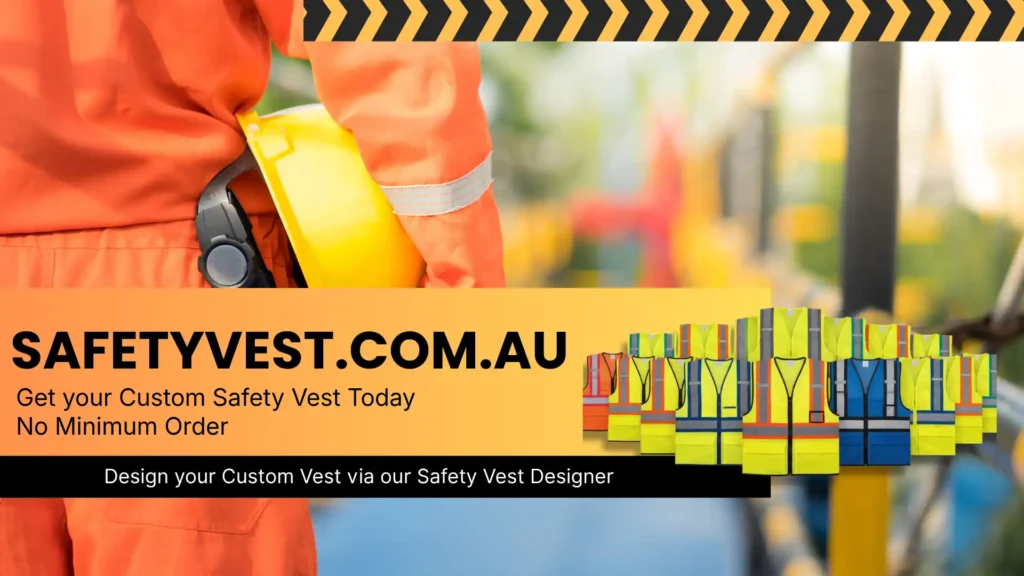
For organisations that already have a brand style guide, the custom safety vest designer at SafetyVest lets you design your own safety vest with logo placement, colour–matching, and reflective strip options that still meet the AS/NZS 4602 compliance guide. The ability to build a consistent look across hundreds of workers boosts site morale and makes safety talk part of everyday conversation.
Step‑by‑Step Guide to Selecting the Best Printed Safety Vest
- Identify the hazard class needed – Class 1 (low risk) uses orange or yellow with 70 mm striping; Class 2 (medium risk) adds yellow‑green or red‑orange combined with larger strips; Class 3 (high risk) requires the most reflective material. Check the SafeWork Australia risk assessment for your work zone.
- Choose the correct base colour and reflective layout – The base colour must contrast with the background environment (e.g., orange for construction, yellow for roadwork). Ensure the reflective tape placement follows the standard’s “3‑strip” or “4‑strip” pattern for the selected class.
- Select a printable area that doesn’t compromise visibility – Keep graphics to 25 % of the vest surface and away from the reflective strips. Use high‑contrast inks (white on orange, black on yellow) that survive washing and UV exposure.
- Confirm sizing and fit – Measure chest, waist, and torso length for each employee. A loose vest may flap and reduce visibility, while a tight vest can restrict movement and cause discomfort. Many suppliers, including SafetyVest, offer bulk sizing charts and a try‑on service.
- Order to a verified compliance supplier – Verify that the manufacturer provides a test certificate for each batch. The full compliance requirements page lists accredited producers and how to read their documentation.
Australian Context: Compliance, Industries, and State Variations
Across Australia, the same national standard applies, but state regulators add nuances. In NSW, WorkSafe demands that all traffic‑control personnel wear Class 2 vests with a minimum of 200 cd/m² retro‑reflective material. Victoria’s WorkSafe emphasises colour‑coded vests for different site roles – orange for plant operators, yellow for pedestrian traffic controllers. Queensland’s mining legislation requires an additional “Safety Yellow” strip on the back for underground crews.
Key industries that routinely rely on printed safety vests include:
- Construction – high‑visibility garments must be worn on all exterior sites and near plant.
- Mining – underground and surface operations use Class 3 vests with embossed logos for quick crew identification.
- Traffic control – road‑work crews need Class 2 vests with reflective lettering that can be read from 200 m.
- Warehousing & logistics – forklift operators benefit from orange vests with large reflective logos for aisle safety.
Each sector benefits from a single, branded vest that meets local legislation while reinforcing the company’s safety culture.
Common Mistakes When Buying Printed Safety Vests
- Oversizing graphics – Large logos can cover reflective tape, reducing the vest’s luminance and breaching AS/NZS 4602.1. Keep images small and positioned correctly.
- Choosing the wrong colour for the environment – Bright orange works well on construction sites but can blend into a desert backdrop in central Australia. Match the base colour to the typical background of your work area.
- Ignoring wash‑care specifications – Low‑quality inks fade after a few washes, leaving the vest non‑compliant. Specify “wash‑fast” printing and request a fabric test report.
- Skipping the compliance certificate – Without a batch test certificate, you cannot prove the vest meets the required reflective standards, leaving you exposed to legal risk.
Addressing these pitfalls early saves time, money, and potential fines.
Frequently Asked Questions
What standards do printed safety vests have to meet in Australia?
All printed safety vests must comply with AS/NZS 4602.1, which outlines colour, luminance, and reflective strip requirements for Classes 1‑3. State regulators may add specific colour‑coding or strip‑width rules, so always check your local WorkSafe guidelines.
Can I customise the design without compromising safety?
Yes. Keep graphics to a maximum of 25 % of the vest surface and avoid covering reflective areas. Use high‑contrast, UV‑stable inks, and work with a supplier that offers a custom safety vest designer to ensure the final product stays within compliance.
How many vests should I order for a large crew?
Order a minimum batch of 100 to benefit from bulk pricing and ensure colour consistency across the team. It also simplifies inventory management and guarantees you have enough spare sizes for new hires or replacements.
Do printed safety vests need to be replaced regularly?
Typically every 12‑18 months, or sooner if the reflective strips lose luminance, the print fades, or the fabric shows wear. Regular inspections as part of your PPE audit will tell you when a replacement is required.
Ready to get your team visible and on‑brand? [Design your own safety vest] (https://safetyvest.com.au/custom-safety-vests) today and stay compliant across Australia.