Custom Reflective Vests: 2025 Essential Buyer’s Guide
When you need custom reflective vests that actually keep workers visible, there’s no substitute for a guide that cuts through the jargon and delivers the facts you need to purchase confidently. In 2023, SafeWork Australia recorded a 12% rise in hi‑vis‑related incidents on construction sites, underscoring that the right vest isn’t just a fashion choice – it’s a lifesaver.
Why the Right Vest Matters Across Australia’s Workplaces
Australia’s vast and varied work environments mean that a one‑size‑fits‑all approach to high‑visibility clothing simply doesn’t work. The national standard AS/NZS 4602.1 sets out colour, retro‑reflectivity and design requirements, but each state and territory enforces its own nuances. For example, WorkSafe Victoria mandates a minimum 3‑metre reflective strip width for traffic‑control duties, while Queensland’s mining regulations demand extra durability testing for dust‑filled atmospheres.
Failing to meet these standards can lead to costly fines, insurance premiums climbing, and most importantly, increased risk of injury. Employers who invest in properly spec’d vests show a measurable drop in near‑miss reports – a trend highlighted in the 2024 SafeWork Australia safety performance dashboard.
How to Choose the Perfect Custom Reflective Vest
-
Identify the required class – AS/NZS 4602.1 defines Class E, D, C and B vests. Class E is for low‑risk environments, while Class B is mandatory for high‑risk, high‑speed traffic zones. Match the class to the specific task.
-
Select the right colour palette – Fluoro yellow, orange and red are the most visible in daylight; fluorescent green and blue improve night‑time visibility when paired with retro‑reflective tape. Your choice should reflect the dominant background of the worksite.
-
Determine strip placement and width – Horizontal strips are ideal for construction and warehousing, while diagonal or chevron patterns excel in road‑work settings. A minimum of 75 mm strip width is required for Class C and above.
-
Consider fabric performance – Look for breathable, moisture‑wicking polyester blends that meet ISO 11137‑1 for flame resistance if required. For outdoor sites, a water‑repellent finish prolongs colour vibrancy.
-
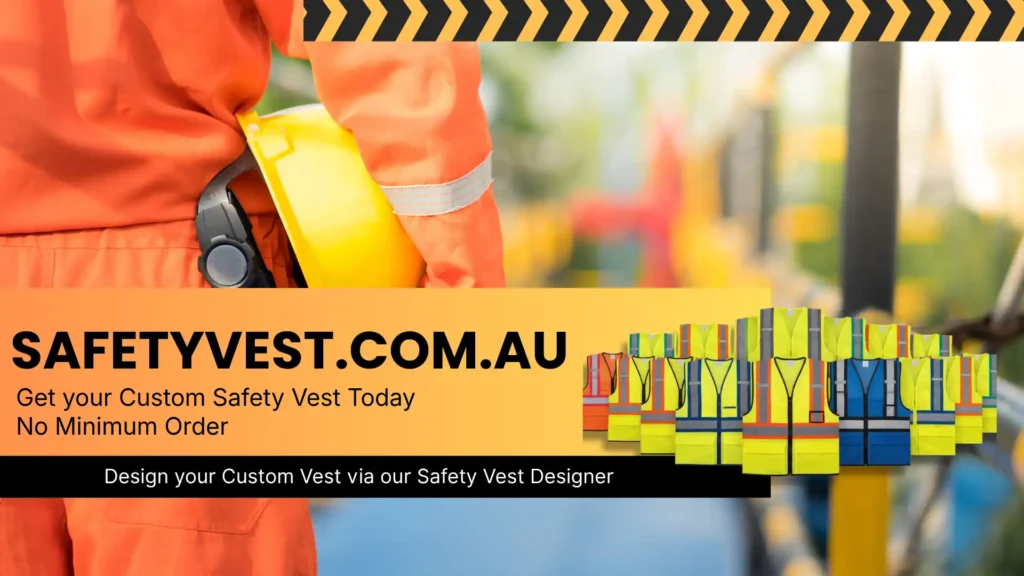
Add branding without compromising safety – Your logo can be embroidered or screen‑printed on the back or chest, provided it doesn’t cover more than 5 % of the reflective surface. Use the custom safety vest designer to design your own safety vest and preview how branding integrates with safety zones.
-
Check for country‑specific certifications – Verify that the supplier provides a compliance certificate referencing the latest AS/NZS 4602 compliance guide. This documentation is essential for audits and incident investigations.
-
Plan for sizing and bulk ordering – Ordering in multiples of 25 often unlocks discounts and ensures colour consistency across a large crew. Provide detailed size charts to the manufacturer to minimise returns.
Australian Compliance, Industry Use Cases, and Buying Tips
For the construction sector, the combination of high‑rise scaffolding and busy traffic routes makes Class C vests the minimum requirement in NSW, VIC and WA. A typical crew will use high‑visibility safety garments on site from sunrise to sunset, so durability and comfort are paramount.
In mining, the dusty underground environment demands vests with sealed seams and anti‑static properties. Queensland’s mining safety directive also requires reflective tape to be UV‑stable, even though the work is underground, because of occasional surface inspections.
When buying, request a sample batch that has undergone the full full compliance requirements test series – colourfastness, tape adhesion and seam strength. Keep a copy of the test report alongside your purchasing records for each supplier.
Common Mistakes and How to Avoid Them
-
Skipping the class check – Many buyers assume any hi‑vis vest will do. Selecting a Class E vest for a road‑work crew exposes workers to unnecessary danger and breaches regulations.
-
Oversizing logos – A large logo that masks reflective strips can invalidate the vest’s compliance. Keep branding subtle and within the 5 % limit.
-
Ignoring care instructions – Machine‑washing at high temperatures can melt reflective tape. Always follow the manufacturer’s laundering guidelines to retain performance.
-
Buying off‑the‑shelf without a safety vest FAQs review – Understanding the nuances of colour, class and fabric can save thousands in re‑orders.
These pitfalls are frequent enough that they appear in the top common questions about safety vests, and addressing them up front protects your budget and your workers.
Frequently Asked Questions
What AS/NZS standard must custom reflective vests meet in Australia?
Vests must comply with AS/NZS 4602.1:2011, which outlines colour, retro‑reflective strip width, and performance classes (E, D, C, B). Compliance is verified through testing and a certification statement from the supplier.
Can I add my company logo without breaking compliance?
Yes, as long as the logo does not cover more than 5 % of the reflective surface and is placed on non‑critical areas like the back or chest. Use the custom safety vest designer to preview the layout before ordering.
How do I know which class of vest I need for my crew?
Match the class to the risk level: Class E for low‑risk indoor tasks, Class D for general outdoor work, Class C for high‑speed traffic zones, and Class B for the most hazardous environments like road‑work with vehicle traffic.
What’s the fastest way to order custom reflective vests for a large project?
Contact a reputable supplier, request a compliance certificate, provide detailed size and colour specifications, and place bulk orders in multiples of 25. Using the custom safety vest designer streamlines the process and ensures branding accuracy.
Ready to equip your team with compliant, high‑visibility gear that reflects your brand? Build your branded vest online today.