Safety Vests for Sale 7 Must‑Know Tips for 2025 Buyers
Safety vests for sale are more than a fashion choice – they are a legal requirement for many Australian workplaces. In 2023, SafeWork Australia recorded a 12 % rise in slip‑through incidents where workers were not visible to traffic or machinery operators, underscoring the importance of getting the right high‑visibility garment. Whether you’re fitting out a construction crew in New South Wales or revamping a school’s traffic‑control team in Queensland, the vest you buy today will set the safety baseline for 2025 and beyond.
Why the Right Safety Vest Matters in Australia
Australian workplaces operate under strict standards that balance protection, comfort, and durability. The cornerstone is AS/NZS 4602.1:2011, the high‑visibility clothing standard that dictates colour, retro‑reflective material, and performance class (Class 1‑4). SafeWork Australia reinforces these rules across all jurisdictions, while state bodies such as WorkSafe Victoria and Queensland Workplace Health & Safety enforce local compliance audits.
A common pitfall is treating a vest as a one‑size‑fits‑all item. In reality, the same high‑visibility garment that passes inspection for a warehouse may fall short on a busy road‑work site where Class 3 or 4 is mandated. Selecting the correct class, colour (fluoro‑yellow, orange or red), and reflective strip placement directly influences whether a worker is seen at 200 m in daylight or 60 m at night.
Because the vest is a visible part of your PPE (personal protective equipment) suite, it also reflects your organisation’s safety culture. Companies that regularly audit their hi‑vis inventory and replace worn garments see a 22 % reduction in near‑miss reports, according to a 2024 SafeWork Australia case study.
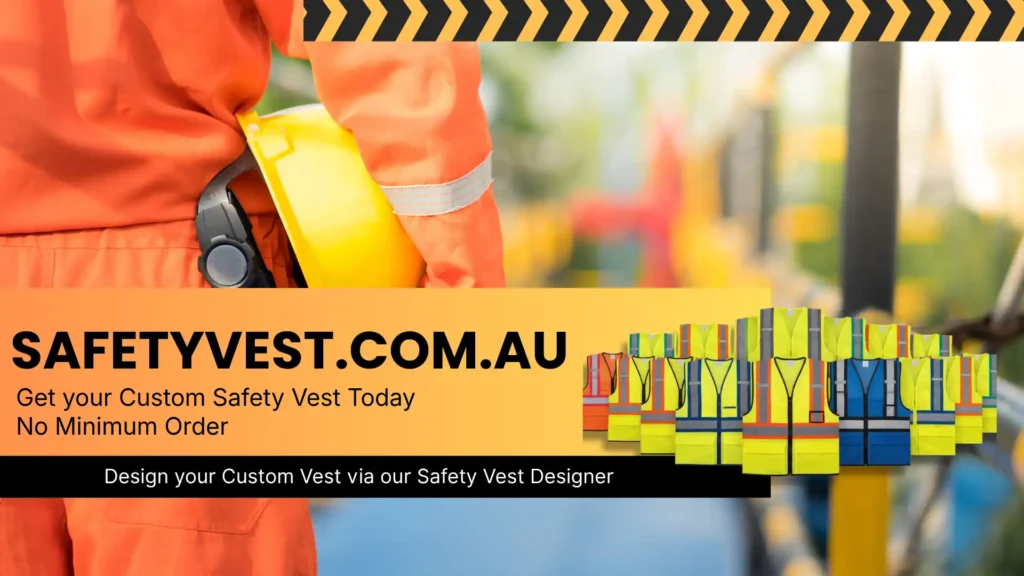
If you’re ready to design your own safety vest, the custom safety vest designer at SafetyVest allows you to insert logos, name‑tags, and colour blocks while staying within the AS/NZS 4602 framework.
7 Practical Tips for Picking Safety Vests in 2025
-
Identify the required performance class – Review the risk assessment for each work zone. Class 1 is sufficient for low‑risk indoor environments, while Class 4 is mandatory for high‑risk, high‑speed traffic areas.
-
Match the colour to the environment – Fluoro‑yellow works best in daylight, orange for low‑light daytime, and red for emergency responders. Remember, the colour must dominate the garment area (at least 57 % for Class 3/4).
-
Check the retro‑reflective strips – Ensure the strips meet the size and placement criteria in AS/NZS 4602.1. For Class 3, a minimum of 200 mm² of 3‑M‑type tape per side is required.
-
Prioritise comfort and fit – Adjustable necks, elastic cuffs, and breathable mesh panels reduce fatigue, especially in hot Queensland summers.
-
Verify durability – Look for UV‑stabilised fabrics and double‑stitched seams that survive the rigours of construction sites or mining camps.
-
Consider customisation for brand visibility – A high‑visibility vest that also carries your company logo reinforces safety messaging and meets the AS/NZS 4602 compliance guide for colour contrast.
-
Plan a replacement schedule – High‑visibility material degrades after 12‑18 months of regular use. Mark each vest with a purchase date and set calendar reminders for audits.
Australian Compliance, Industry Use Cases, and Buying Guide
Across Australia, the application of high‑visibility safety garments varies by industry. In the construction sector, the majority of contracts in NSW now require Class 3 vests for any activity within 10 m of vehicle pathways, as stipulated by SafeWork NSW’s site‑specific safety plan. Meanwhile, the mining industry in WA demands Class 4 vests with additional “danger‑zone” graphics for underground shift crews, because low‑light conditions amplify the need for reflective performance.
When buying, start by downloading the full compliance requirements from the AS/NZS 4602 compliance guide. Cross‑reference the standard with state‑specific legislation – for example, Queensland’s Work Health and Safety Regulation 2011 adds a clause that all high‑visibility PPE must be inspected weekly.
A practical buying workflow for Australian employers looks like this:
- Conduct a site‑specific risk assessment → Determine the required class & colour → Select a supplier that offers a custom safety vest designer for branding → Order a sample batch for trial fit → Log the batch in your PPE register → Schedule annual replacement.
By following this workflow, you align with national standards, satisfy state regulators, and ensure that every worker—whether on a Sydney road‑work crew or a Perth warehouse floor—is visible when it counts.
Common Mistakes and How to Avoid Them
A frequent error is purchasing the cheapest hi‑vis workwear without verifying the performance class. Low‑cost vests often use non‑conforming reflective tape, which fails to meet the 3‑M or 4‑M specifications required for Class 3/4. This not only endangers staff but can lead to hefty fines during a WorkSafe audit.
Another pitfall is neglecting the maintenance schedule. Employers assume a vest will stay compliant for years, yet exposure to sunlight, washing, and abrasion erodes the reflective material. A quick visual check—looking for faded strips or cracked seams—can flag items that need replacement before they become a liability.
Finally, many organisations overlook the importance of fit. A vest that rides up or is too loose reduces the effectiveness of the reflective zones. Encourage workers to try on multiple sizes and adjust the neck and cuff closures before finalising the purchase.
Addressing these mistakes not only safeguards your team but also positions your business to achieve higher safety audit scores and lower insurance premiums.
Frequently Asked Questions
What class of safety vest do I need to meet AS/NZS 4602 compliance?
The required class depends on the work environment’s risk level. Class 1 is for low‑risk indoor work, Class 2 for general outdoor tasks, Class 3 for high‑risk traffic areas, and Class 4 for very high‑risk or low‑light conditions such as mining or road‑work zones.
Can I customise a safety vest with my company logo without breaking the standard?
Yes. As long as the logo does not interfere with the mandated colour and reflective strip placement, you can add branding through the custom safety vest designer. The AS/NZS 4602 compliance guide outlines acceptable overlay dimensions.
How often should I replace high‑visibility vests?
Typically every 12‑18 months, or sooner if the reflective material shows fading, tearing, or loss of elasticity. Conduct a weekly visual inspection and log the replacement date in your PPE register.
Where can I buy safety vests for sale that are guaranteed to meet Australian standards?
Australian‑based suppliers that reference the AS/NZS 4602 compliance guide and offer a custom safety vest designer ensure you receive certified, high‑visibility garments.
Ready to outfit your team with compliant, comfortable, and brand‑visible high‑visibility gear? Build your branded vest online today and keep your workers safe tomorrow.