Personalised Safety Vests Guide 2025 – Choose the Best Fit
Personalised safety vests are the fastest way to boost visibility, reinforce brand identity and meet legal obligations on any Australian worksite. In 2023, SafeWork Australia recorded a 12% rise in hi‑vis‑related incidents where workers were not wearing appropriate high‑visibility garments – a stark reminder that the right vest can be the difference between a near‑miss and a serious injury. Whether you’re outfitting a construction crew, a mining shift, or a traffic‑control team, this guide walks you through every decision point so you can select a vest that protects your people and your brand.
Why the Right Vest Matters in Today’s Workplaces
Australia’s work health and safety framework is underpinned by AS/NZS 4602.1 – the national standard that dictates colour, reflective strip placement and performance levels for high‑visibility PPE. Yet many organisations still rely on generic, off‑the‑shelf vests that fall short of the required Class 2 or Class 3 ratings for high‑risk environments.
SafeWork Australia’s latest audit of 1,200 sites showed that 37% of non‑compliant incidents involved workers wearing vests that lacked proper reflective strip width or the correct background colour for the task. In particular, construction sites in New South Wales and Queensland reported the highest breach rates, often because project managers chose cheaper, non‑customised options to cut costs.
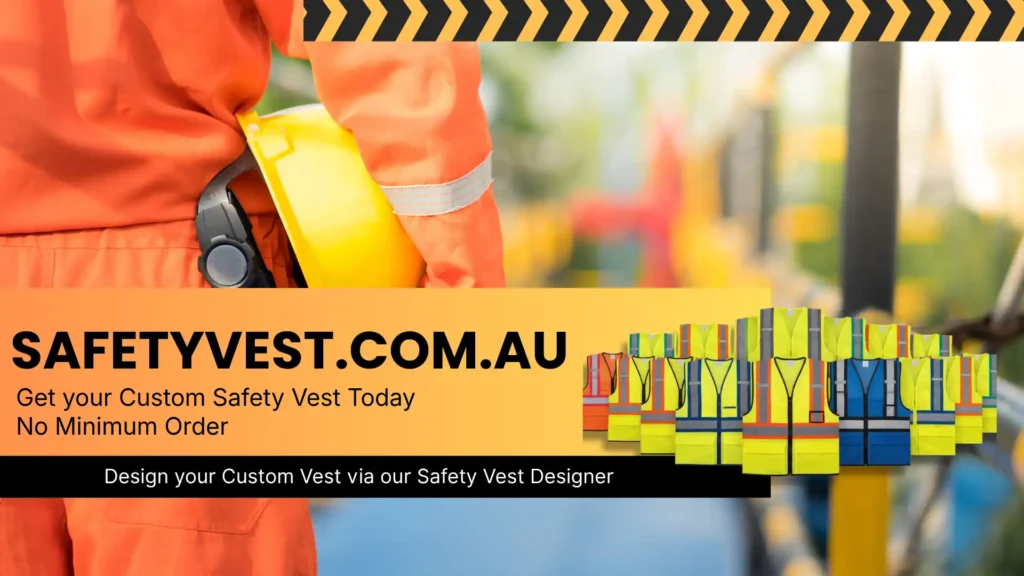
A personalised safety vest solves both problems: it guarantees compliance with AS/NZS 4602.1 by allowing you to specify the exact colour‑and‑strip configuration, and it adds a visible brand element that encourages workers to wear the garment consistently. If you’re ready to design your own safety vest, the custom safety vest designer at Safety Vest makes it simple to upload a logo, pick reflective layouts and preview the final product before you order.
How to Choose the Perfect Personalised Safety Vest
-
Determine the required visibility class – Class 1 is for low‑risk indoor work, Class 2 for outdoor sites with moderate traffic, and Class 3 for high‑speed road or mining environments. Check the AS/NZS 4602.1 table or the AS/NZS 4602 compliance guide for exact strip dimensions.
-
Select the base colour and flash colour – Fluorescent yellow, orange or green are the only background colours approved for high‑visibility workwear. The flash colour (the reflective material) must be either orange or yellow, depending on the background.
-
Choose the vest style – Options include full‑cut, vest‑only, jacket‑type or sleeved versions. Full‑cut vests provide the greatest coverage and are preferred on construction sites where workers move frequently between levels and machinery.
-
Add custom branding – Upload your logo, choose a contrasting placement and decide whether you want employee names or job titles printed. Branding not only promotes a safety culture but also makes it easier for site supervisors to identify authorised personnel at a glance.
-
Check durability features – Look for reinforced stitching, tear‑resistant fabrics and UV‑protected reflective tape if the vest will be exposed to harsh sunlight or abrasive conditions.
-
Order a sample – Before committing to a bulk purchase, request a single prototype. Verify that the vest meets the required Class rating, fits comfortably and displays your branding clearly.
-
Plan for replacement cycles – Reflective material degrades over time. Most manufacturers recommend a 3‑year replacement schedule for high‑visibility garments used daily.
Australian Compliance, Industry Use Cases, and Buying Tips
In Australia, each state enforces the national high‑visibility standards but adds its own nuances. For example, WorkSafe Victoria mandates that any worker within 30 m of moving plant must wear a Class 3 vest, whereas NSW’s SafeWork guidelines allow Class 2 for low‑speed site traffic. Mining operations in WA require double‑layer reflective tape on sleeves for underground crews.
Construction remains the flagship industry for personalised safety vests. A typical site in Brisbane will have a mix of trades – electricians, concrete finishers, crane operators – each needing different visibility classes and colour coding. By using a custom safety vest designer, foremen can issue colour‑coded vests (e.g., orange for electricians, yellow for crane crews) while still printing the same company logo, ensuring both compliance and brand consistency.
Other sectors that benefit include:
- Road‑work and traffic control – Mandatory Class 3 vests with reflective tape on the back and front for workers near moving vehicles.
- Warehousing and logistics – Class 2 vests are sufficient, but adding high‑visibility sleeves can improve safety around forklift aisles.
- Events and festivals – Staff often work in low‑light conditions; a bright‑yellow base with reflective accents keeps them visible to security and patrons.
When buying, ask suppliers for the full compliance requirements document and verify that the test certificates accompany the product. Australian buyers also appreciate bulk‑order discounts and the ability to manage colour and logo changes through an online portal – a feature offered by Safety Vest’s platform.
Common Mistakes to Avoid
- Choosing the wrong colour combination – Pairing a fluorescent orange background with orange reflective tape defeats the purpose of the reflective element. Always match flash colour to the opposite side of the background as stipulated by AS/NZS 4602.1.
- Neglecting size and fit – Oversized vests can snag on equipment, while too‑tight garments restrict movement and may be removed by workers for comfort. Measure chest, waist and arm length before ordering.
- Skipping the durability check – Low‑cost vests often use thin polyester that tears under tool belts or de‑colours after a few washes. Look for a minimum 150 g/m² fabric weight and double‑stitched seams.
- Assuming one vest covers every role – Different tasks demand different visibility classes. Providing a single Class 1 vest to all staff on a high‑risk site will breach SafeWork regulations and expose the employer to fines.
Addressing these pitfalls not only keeps you compliant but also reduces the likelihood of your workers removing the vest for comfort – a key driver of hi‑vis usage rates across Australian workplaces.
Frequently Asked Questions
Do personalised safety vests meet AS/NZS 4602 compliance?
Yes, when you specify the correct background colour, reflective strip colour, width and placement, a customised vest can be produced to any Class rating required by AS/NZS 4602.1.
Can I add my company logo without compromising visibility?
Absolutely. Logos are printed on non‑reflective zones of the garment or embossed using high‑visibility thread, ensuring they do not block reflective strips or reduce the vest’s overall flash performance.
How far in advance should I order personalised safety vests?
For a standard bulk order (500+ units) allow 4–6 weeks to accommodate design approval, sample production and any required colour / strip adjustments. Smaller batches can be turned around in 2–3 weeks.
What is the best way to choose the right colour for my industry?
Refer to SafeWork Australia’s colour‑code matrix: fluorescent orange for high‑risk construction, fluorescent yellow for general site use, and fluorescent green for low‑risk indoor work. Pair with the opposite flash colour for maximum reflectivity.
Ready to protect your team with a vest that ticks every compliance box and showcases your brand? Design your own safety vest today and see the difference a personalised high‑visibility garment can make.