How to Choose Fire Safety Vests 2025 Buyer’s Guide
Fire safety vests are the first line of defence for workers who need to be seen while navigating hot‑work zones, emergency evacuations, or low‑visibility environments. In 2023, SafeWork Australia reported that 18% of workplace injuries involving fire were aggravated by poor visibility, underscoring the importance of selecting the right high‑visibility garment. Whether you’re fitting a construction crew, a mining team, or a school’s fire‑evacuation squad, the right fire safety vest can mean the difference between a swift rescue and a costly incident. Below is a step‑by‑step guide to help Australian buyers choose compliant, durable, and comfortable fire safety vests in 2025.
The Core Problem: Why Standard Hi‑Vis Isn’t Enough
Australian workplaces are governed by AS/NZS 4602.1:2011, the national standard that defines the colour, fluorescence, and reflectivity requirements for high‑visibility garments. While a standard hi‑vis vest meets the visual‑signal criteria for most day‑to‑day tasks, it does not address the unique hazards of fire‑related work. In hot‑work environments—welding, torch cutting, oil‑rig flare operations—workers need a vest that not only shines but also resists heat, flame, and abrasion.
SafeWork Australia’s guidance notes that employers must conduct a risk assessment that includes PPE selection for thermal protection. This means selecting a fire‑resistant (FR) fabric that still complies with the colour and retro‑reflective strip requirements of AS/NZS 4602.1. Failure to combine both aspects leaves a safety gap that can expose businesses to fines from state WorkSafe agencies and, more importantly, endanger lives.
Practical Guidance: Step‑by‑Step Selection Process
-
Identify the hazard level – Determine whether the task involves low, medium or high thermal exposure. Low‑risk tasks (e.g., routine traffic control) may only need a standard hi‑vis vest, whereas high‑risk tasks (e.g., hot‑work in confined spaces) demand a fire‑resistant garment that meets NFPA 2112 or Australian FR standards.
-
Check the colour code – For fire safety, the standard colour is fluorescent orange (Class 2) for daytime use and fluorescent yellow (Class 1) for night or low‑light work. Verify that the vest’s colour matches the required class; the AS/NZS 4602 compliance guide provides detailed charts.
-
Look for flame‑resistant fabric – Choose vests made from modacrylic‑blend or inherently flame‑resistant fibres (e.g., Nomex® or Proban®). These fabrics self‑extinguish when exposed to flame and retain their protective properties after multiple washes.
-
Assess reflectivity – Reflective tape must cover at least 50% of the vest’s surface and meet the 3‑M or 5‑M retro‑reflectivity levels specified in the standard. Check that the tape is securely stitched rather than glued, to survive harsh work conditions.
-
Fit and comfort – Look for adjustable straps, breathable backing panels, and ergonomic cuts that allow a full range of motion. A comfortable vest encourages consistent wear, which is essential for safety compliance.
-
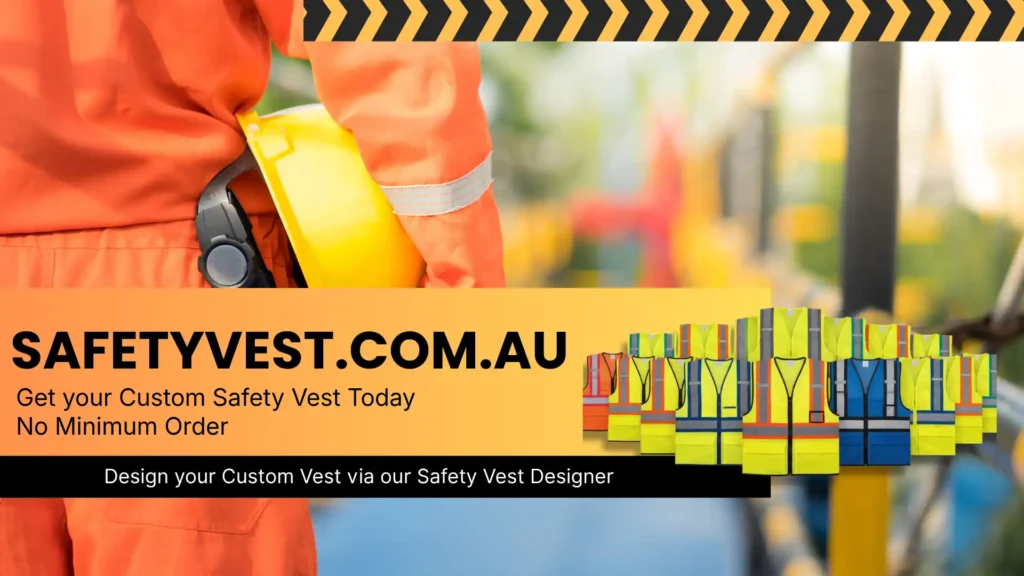
Custom branding (optional) – Adding a company logo or safety messages can reinforce a safety culture. Use the custom safety vest designer to design your own safety vest without compromising compliance.
Australian‑Specific Compliance and Industry Use Cases
Australia’s states and territories enforce the national standard but add local nuances. In New South Wales, WorkSafe NSW requires that any fire‑resistant hi‑vis garment used on construction sites also carry a NSW‑approved compliance label. In Queensland, the Mining Safety and Health Act mandates FR high‑visibility clothing for all personnel entering underground fire‑risk zones, with annual certification checks.
Construction remains the largest user of fire safety vests, especially on sites where welding and cutting are routine. Mining operations in WA and SA often demand double‑layer vests: a base layer meeting FR standards with an outer high‑visibility shell. Event organisers in VIC use fire‑resistant vests for crowd‑control officers during night‑time festivals where pyrotechnics are involved. Each industry must reference the full compliance requirements to ensure the right blend of visibility and thermal protection.
Common Mistakes and How to Avoid Them
- Choosing colour over protection – Some buyers select a bright yellow vest because it “looks safer,” only to discover the fabric isn’t flame‑resistant. Always verify FR certification before colour.
- Skipping the retro‑reflective test – Not all reflective tapes meet the 5‑M requirement for night work. Use a handheld meter or request a certification sheet from the supplier.
- Ignoring wash‑care instructions – FR fabrics can lose their protective qualities if washed with harsh detergents or at high temperatures. Follow the manufacturer’s care guide and keep a log of wash cycles.
- Over‑customising – Adding large printed logos can cover reflective strips, reducing visibility. Keep customisation to the back or sides where it does not interfere with the mandated reflective areas.
These pitfalls often appear in the common questions about safety vests, so double‑check each point before finalising your purchase.
Frequently Asked Questions
What AS/NZS standard must fire safety vests meet?
Fire safety vests must comply with AS/NZS 4602.1 for colour and reflectivity, plus an Australian‑approved fire‑resistant (FR) fabric standard such as NFPA 2112 or the local FR certification.
Can I add my company logo without breaking compliance?
Yes, as long as the logo does not cover required reflective strips or alter the vest’s colour class. Use the custom safety vest designer to place branding in permitted zones.
How many sizes should I order for a mixed‑size crew?
Order a minimum of three sizes—small, medium, and large—for each gender, and consider a size‑mix ratio based on your workforce demographics. Most suppliers provide a sizing guide to help you calculate quantities.
Do fire safety vests need to be replaced after a fire incident?
Even if the vest looks intact, exposure to flame can degrade FR fibres. Follow the manufacturer’s post‑incident inspection protocol and replace the garment if any singeing, discoloration, or loss of reflectivity is detected.
Ready to protect your team with a compliant, comfortable, and custom‑branded fire safety vest? Build your branded vest online today and keep every worker visible and protected.